
A Comprehensive Guide to Choosing the Right Cruise Cabin
Selecting the right cabin is one of the most important decisions that will impact both the cost and quality of a cruise vacation. While luxury suites with butler service and private balconies represent the ideal, most travelers need to balance their desires with their budget constraints.
This guide breaks down the essential information needed to make an informed cabin choice based on individual travel priorities and financial considerations.
Understanding Your Priorities
The first step in cabin selection is determining the purpose and frequency of cruise travel. For a once-in-a-lifetime voyage, investing in a balcony cabin or suite ensures memorable experiences like morning coffee on a private balcony and sunset views over the ocean. These moments often define the cruise experience for many travelers.
However, frequent cruisers face different calculations. The choice often becomes whether to book one expensive balcony cruise or two interior cabin cruises for the same total cost. The decision also requires balancing cabin comfort against other cruise expenses like beverage packages, specialty dining, shore excursions, and Wi-Fi.
The Three Standard Cabin Categories
Interior Cabins
Interior cabins offer the most economical option for cruise accommodations. These rooms include all essential amenities—bed, bathroom, storage, and climate control—in a compact space. They serve well for travelers who spend minimal time in their cabin, using it primarily for sleeping and preparation.
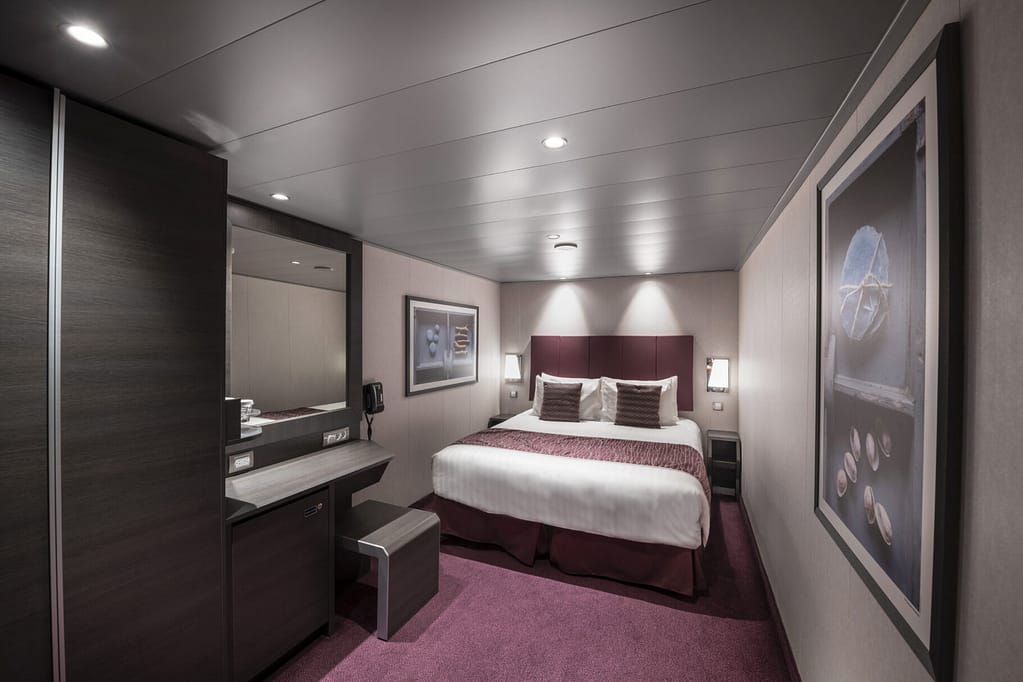
Advantages:
- Lowest price point
- Frequent availability for last-minute bookings
- Identical amenities to other cabin types
- Preferred by travelers focused on activities and excursions
Disadvantages:
- No natural light or windows
- Can feel claustrophobic to some travelers
- Disrupts natural sleep-wake cycles
- Lacks outdoor space or ocean views
Oceanview Cabins
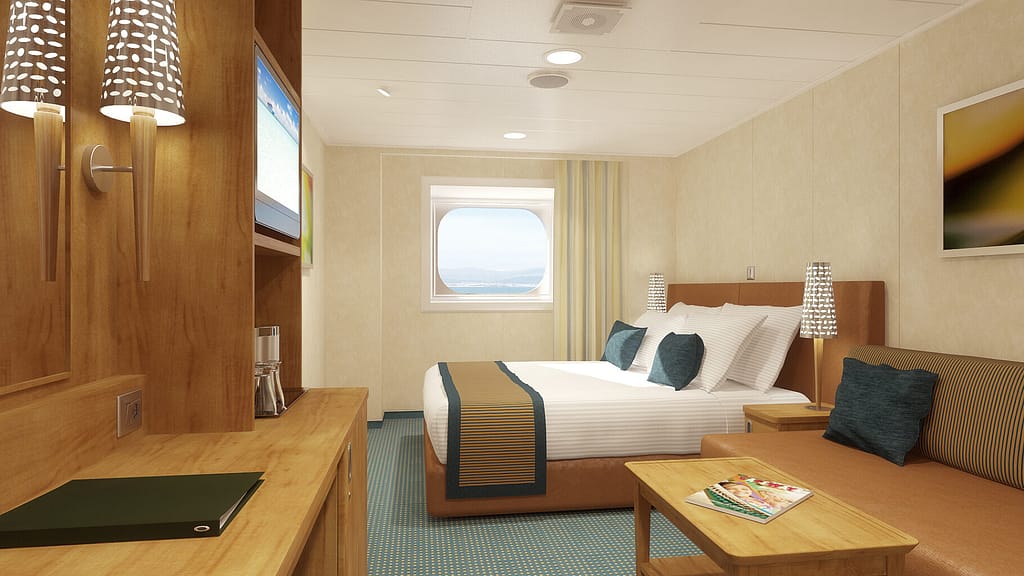
Oceanview cabins provide a middle ground between interior rooms and balconies. These cabins feature a window that allows natural light and ocean views without the premium cost of outdoor space.
Advantages:
- Natural light in the cabin
- Visual connection to the ocean
- Often available for last-minute bookings
- More affordable than balcony cabins
Disadvantages:
- No outdoor access
- Cannot enjoy fresh air or outdoor dining
- Window views only, without the experiential benefits of a balcony
Balcony Cabins
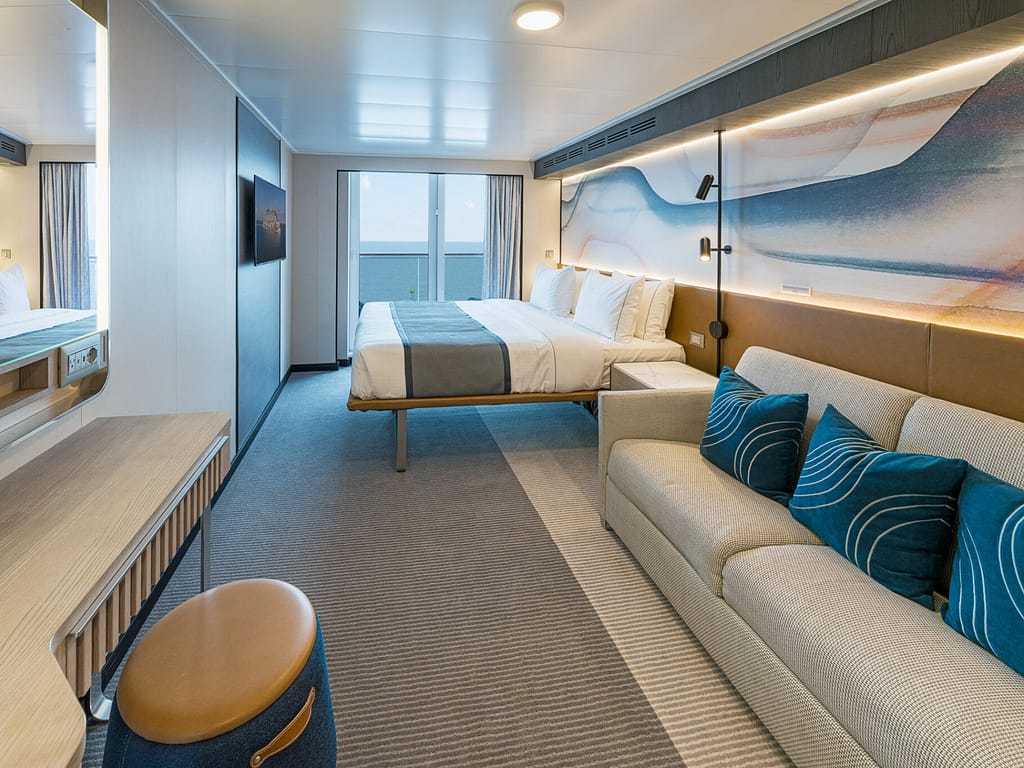
Balcony cabins include private outdoor space accessible directly from the room. These cabins typically offer more interior square footage in addition to the balcony area, allowing for comfortable unpacking and living space.
Advantages:
- Private outdoor space for relaxation
- Fresh air and unobstructed ocean views
- Additional interior room space
- Ideal for scenic cruising destinations
Disadvantages:
- Cost ranges from double to triple that of interior cabins
- Usage varies significantly by destination and itinerary
- May be underutilized on port-intensive cruises
It’s important to note that all passengers have access to public deck spaces, ocean-view lounges, and outdoor seating areas throughout the ship. These common areas provide alternatives for those seeking ocean views and fresh air without booking a balcony cabin.
Suite Accommodations
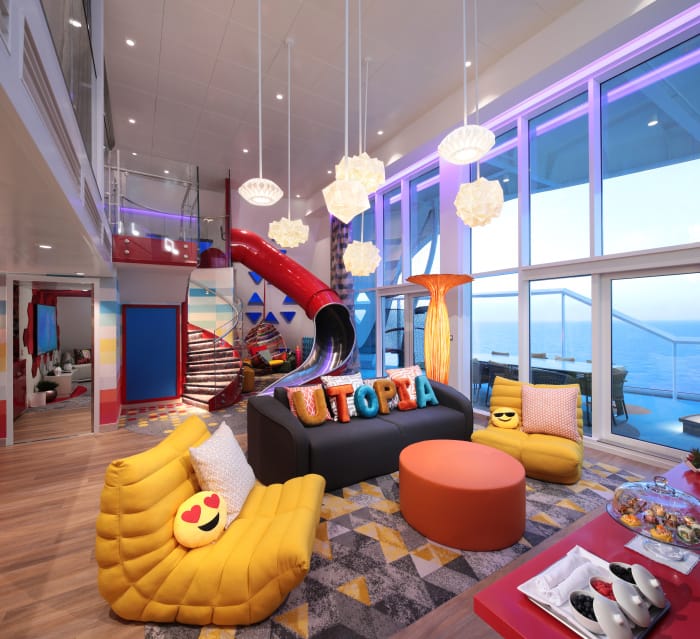
Suites represent the premium tier of cruise accommodations, offering significantly more space and amenities than standard cabins. Cruise lines make a splash with their ultra-luxury options. Virgin Voyages offer Mega RockStar Suites complete with guitars and amps. Many Royal Caribbean ships have multi-level Ultimate Family Suites with private slides and game rooms. These themed suites can cost over $10,000 and remain out of reach for most travelers.
However, standard suites provide a more accessible upgrade for special occasions like anniversaries or milestone celebrations. For families, a single suite may prove more cost-effective than booking multiple adjoining balcony cabins.
Suites also come with extra perks. Most major cruise lines now offer exclusive areas for suite guests, as well as priority access to certain features.
Standard Suite Features
- Separate sleeping and living areas (divided by curtains or walls)
- Full-size bathtubs instead of standard showers
- Double vanities in bathrooms
- Substantial increase in total square footage
- Enhanced storage and living space
Suite Perks:
- Private dining venues
- Exclusive pools and hot tubs
- Concierge services
- Priority bookings for shows, excursions, and spa treatments
Location, Location, Location
Cabin location significantly impacts the cruise experience, sometimes as much as the cabin category itself.
Aft-Facing Cabins
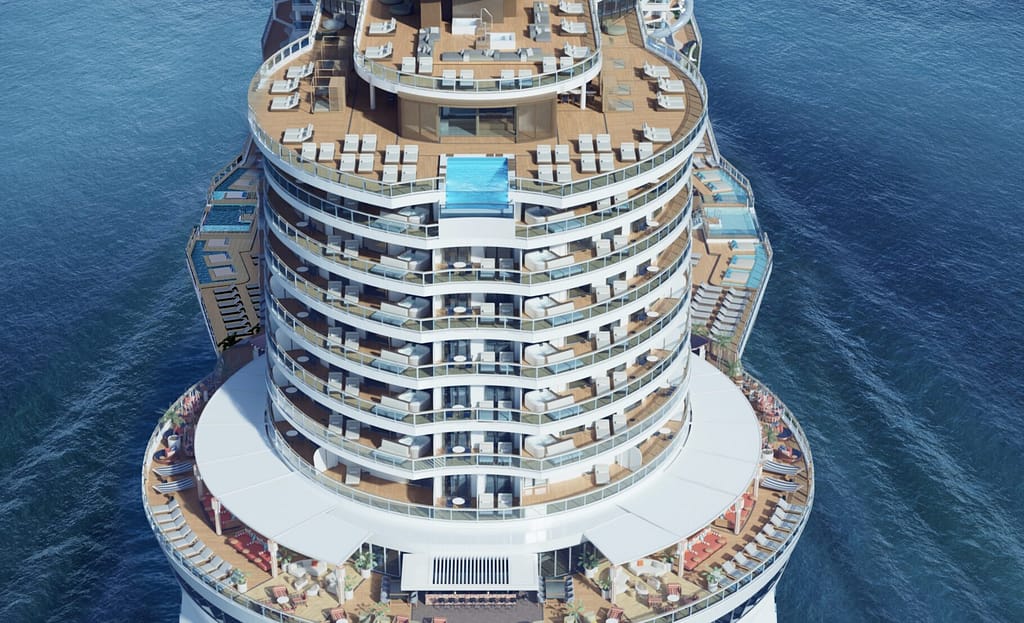
Aft cabins face the rear of the ship, providing views of the ship’s wake trailing into the horizon.
Benefits:
- Spectacular sunset views
- Less wind exposure than side-facing balconies
Drawbacks:
- Premium pricing
- High demand and limited availability
Forward-Facing Cabins
Forward cabins offer views of approaching destinations and ports.
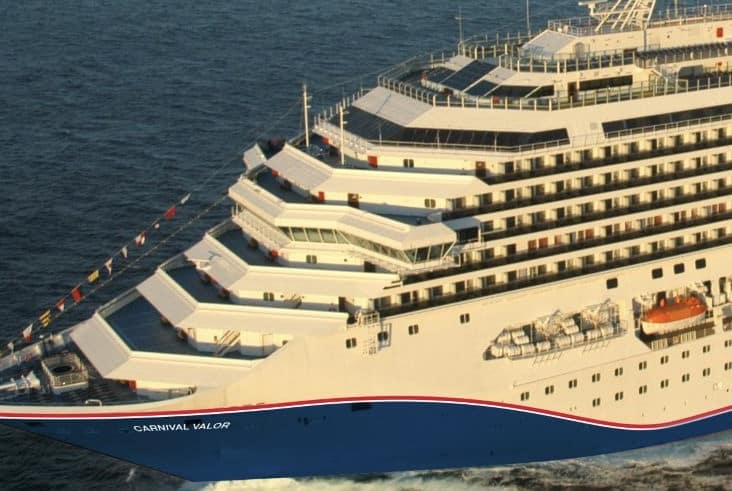
Benefits:
- Exciting arrival views each morning
- Unique perspective on navigation
Drawbacks:
- Some older ships have public walkways in front of these cabins, meaning passersbys can see into cabin windows
Proximity to Amenities
One Deck Below the Buffet: This location provides easy access to complimentary beverages available at buffet self-serve stations (water, iced tea, juice, and coffee). Most bars do not serve these free drinks, making buffet proximity valuable for cruisers without beverage packages. The location minimizes walking distance for frequent beverage runs.
Near Elevators: Cabins close to elevators provide convenient access to all ship facilities—dining venues, entertainment, pools, and activities. This location reduces hallway walking when retrieving forgotten items or making multiple trips throughout the day.
Noise Considerations: Both locations have reputations for noise—buffet operations overhead and elevator activity nearby. However, noisy neighbors typically cause more disturbance than location-based noise. The exception is engine noise on lower decks, particularly near the bow, which can be significant.
Port vs. Starboard Selection
The port (left) side theoretically faces the pier, offering better port views. However, especially in the Caribbean, gangways can be positioned on either side depending on the port configuration.
For round-trip cruises, both sides typically offer similar views. One-way itineraries present more significant differences. For example, a port-side balcony on a Seattle-to-Anchorage Alaska cruise provides sunset views every evening.
Decision Framework
Which Cabin Should I Book?
Choosing a less expensive cabin category can free up budget for other cruise enhancements. The savings from booking an interior cabin instead of a balcony could cover a beverage package, internet access, shore excursions, or specialty dining.
So when is it worth spending more on your cabin?
Interior
• Multiple cruises per year
• Itinerary with many port stops
• Prioritizing budget for onboard experiences
Oceanview
• Compromise between price and amenities
• Need natural light
•Booking last-minute cruise
Balcony
• Sailing to scenic destinations
• Itinerary with multiple sea days
• Value private outdoor space
Suite
• Celebrating a major milestone
• Traveling with family
• Able to afford premium pricing
No single cabin type suits all travelers or all cruises. The optimal choice depends on individual priorities, budget constraints, cruise destination, and travel frequency. The most important outcome is securing a cabin that enables travelers to enjoy their cruise experience without financial strain or constant discomfort. Whether in a compact interior cabin or an expansive suite, the primary goal remains the same: getting on the ship and enjoying the adventure at sea.