Watch It on YouTube!
When thousands of people board a floating resort with unlimited food, alcohol, and ocean views, the potential for spectacular lapses in judgment increases exponentially. This is the second installment in our series examining cruise ship chaos, and this time the focus shifts to a particular breed of maritime meltdown: the cruise ship Karen. These stories showcase passengers who combined entitlement with poor decision-making, creating incidents that range from petty complaints to actual federal crimes.
The Bluetooth Speaker Vigilante
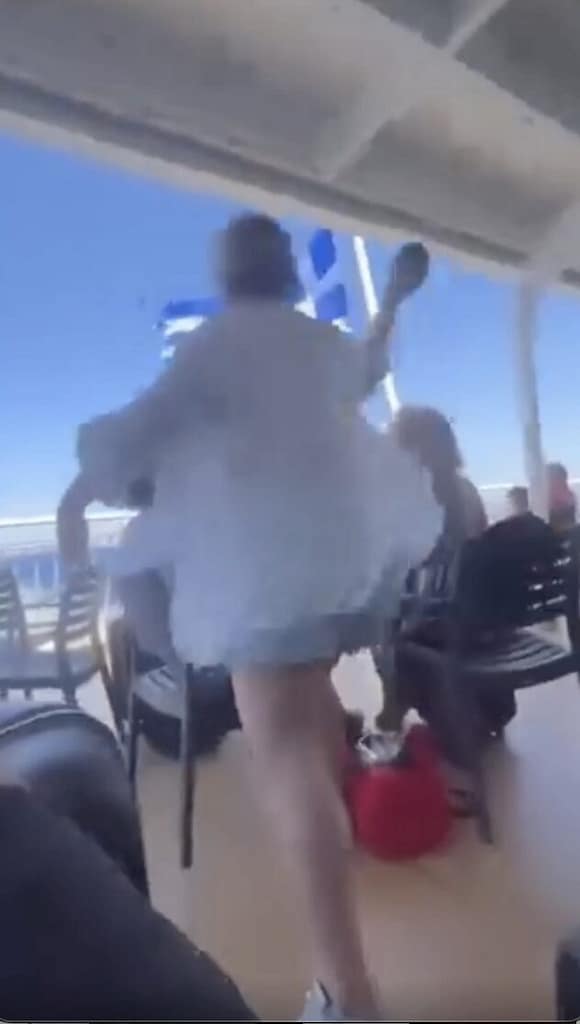
A passenger on a Greek cruise discovered just how strongly some people feel about noise levels when a complete stranger approached her table, grabbed her Bluetooth speaker mid-song, walked directly to the railing, and hurled it into the Mediterranean Sea. The entire incident was captured on video, showing the perpetrator watching the speaker sink to the bottom before walking away without a word of explanation.
The viral video divided viewers into two distinct camps. Half celebrated the speaker-thrower as a hero enforcing common courtesy, while the other half pointed out that she had committed theft and destroyed someone’s property. Cruise lines have indeed implemented policies regarding speakers (Carnival bans them entirely) but the question remains whether personal annoyance justifies taking matters into one’s own hands. The woman essentially decided that her preference for quiet superseded another passenger’s right to enjoy their own purchased property in a public space.
Stranded in Paradise, Or So She Claimed
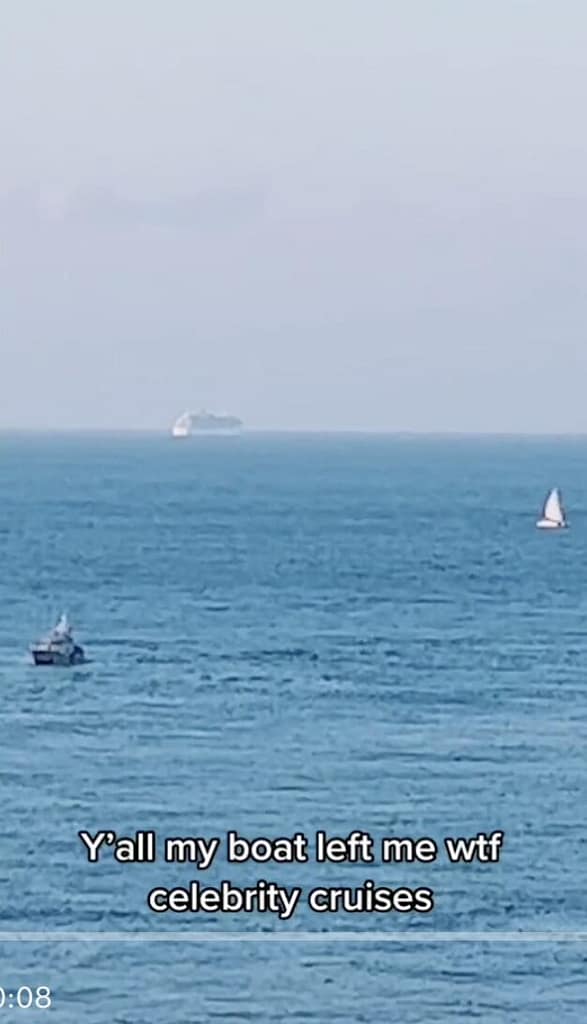
A woman’s viral video accusing Celebrity Cruises of abandoning her on an island in Mexico garnered five million views and triggered widespread outrage. She filmed the ship sailing away, expressing disbelief that she had been left behind and asking what she was supposed to do while stranded. Comments flooded in criticizing the cruise line for such callous treatment of a passenger.
The truth emerged in her follow-up video. She had missed the ship not due to any failure on Celebrity Cruises’ part, but because she had gotten drunk, started enjoying music on the beach, and fell asleep. Cruise lines announce return times repeatedly throughout port days, making it nearly impossible to miss the information. Her initial instinct was to blame the company publicly on social media rather than acknowledge her own responsibility. She eventually had to fly to the next port to rejoin the ship, turning what should have been a simple day at the beach into an expensive and embarrassing ordeal.
The Bra Key Controversy
A Royal Caribbean passenger took to Reddit with a complaint that ignited nearly 400 comments worth of debate. The post, titled “Ladies— Get a Lanyard,” expressed disgust at witnessing multiple women pulling their room keys from their bras in public before handling drink glasses. The poster argued this practice was unhygienic for both crew members and other passengers.
The internet split into Team Disgusted and Team Practical. Those supporting the complaint pointed out the obvious hygiene concerns, while defenders argued that bras are likely cleaner than many other surfaces on a cruise ship, including handrails and buffet tongs. Women chimed in to highlight a legitimate problem: swimwear lacks pockets, and carrying a purse to the pool is impractical. One cruise blogger even admitted she might have been the person spotted, explaining she had no other option for storing her key card while swimming. The debate ultimately revealed a design flaw in cruise ship operations rather than passenger inconsideration.
The Chair Hog Epidemic
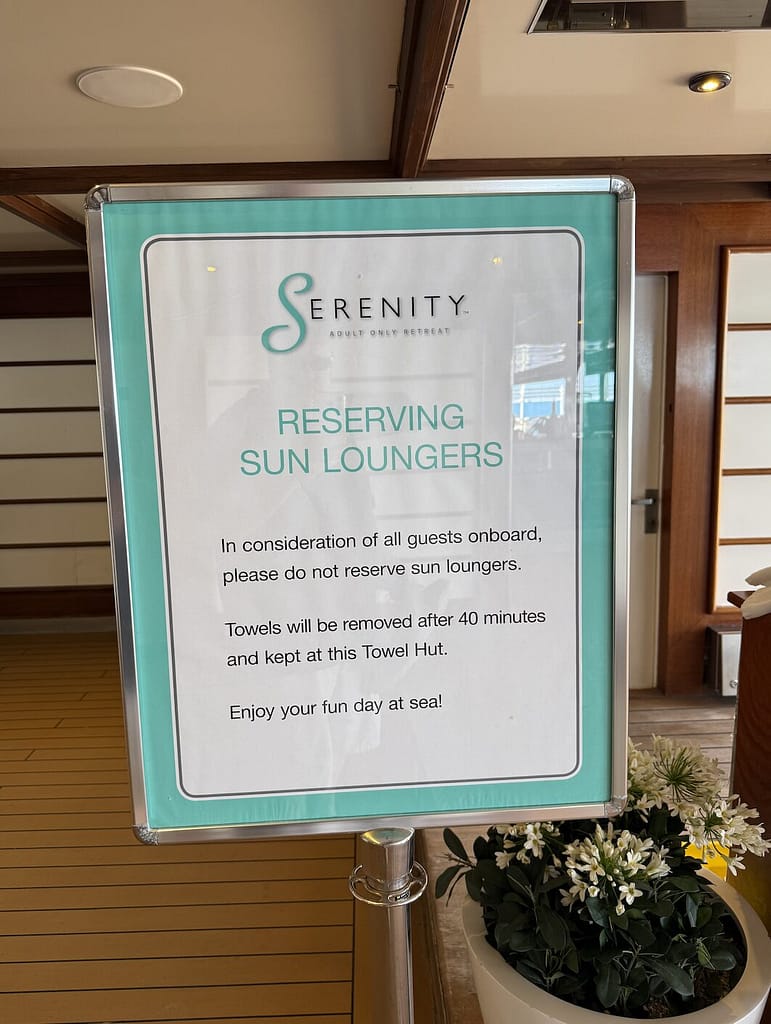
Pool chair politics represent one of the most contentious issues in cruising, and TikToker Jess documented the problem perfectly aboard Royal Caribbean’s Utopia of the Seas. Her video showed row after row of empty chairs covered with towels, flip-flops, and sunglasses at 8:30 in the morning, with no actual humans anywhere in sight. These ghost reservations had been claimed at dawn by passengers who then disappeared for hours.
Both Royal Caribbean and Carnival maintain policies about unattended chairs (removal of items after 30 to 40 minutes) but enforcement remains sporadic at best. The debate centers on whether waking up at six in the morning to claim chairs demonstrates dedication or entitlement. While staying nearby to use the pool area seems reasonable, leaving chairs reserved during four-hour shore excursions stretches the concept of shared public space beyond recognition.
The Beach Music Complaint
An American woman on a cruise port stop in Mexico provided a masterclass in cultural insensitivity when she approached local authorities to complain about musicians playing traditional music on a public beach. The irony was striking: she had traveled to Mexico presumably to experience the culture, then demanded that locals stop being authentically Mexican because it interfered with her relaxation.
Video of the incident spread across Reddit, where commenters noted the absurdity of a tourist on a six-hour port visit asking people who actually live in the country to modify their behavior. The musicians were simply doing their jobs in their own country, providing the exact kind of cultural atmosphere that draws tourists to Mexico in the first place. While beach vendors can occasionally be aggressive about soliciting tips, the video showed no evidence of harassment— just a woman who apparently expected an entire nation to cater to her personal preferences.

The Barefoot Dancer Assault
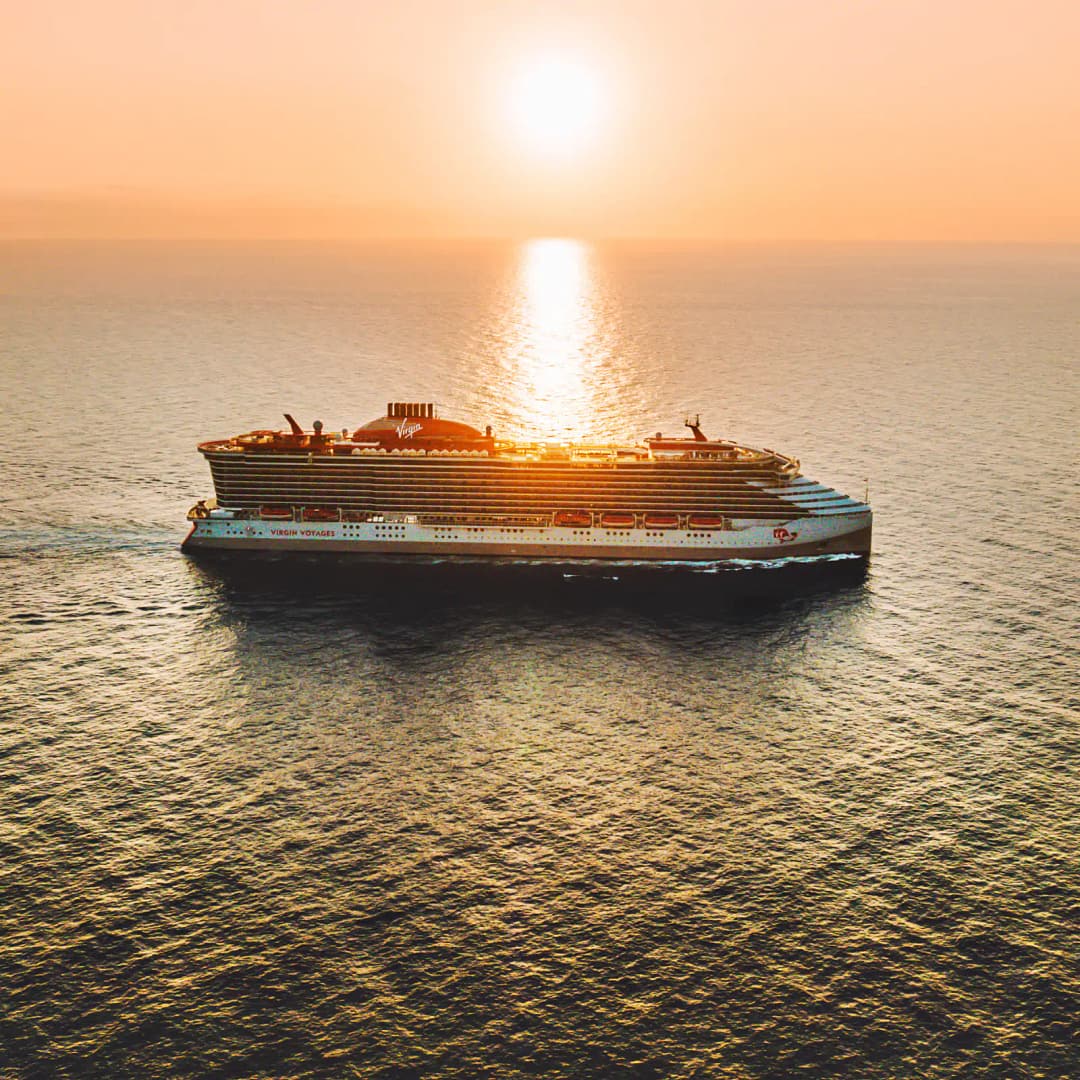
What began as an unremarkable scene at a Virgin Voyages bar escalated into a federal case involving the FBI. A man was dancing barefoot at On The Rocks bar aboard the Resilient Lady when a woman approached him to police his footwear choices, telling him to put his shoes on because “we are all grown-ups here.” The dancer responded rudely with profanity and a middle finger, which was admittedly not his finest moment.
The situation took a dark turn when the woman’s husband, Kenneth DeGiorgio, CEO of First American Financial Corporation, allegedly grabbed the dancer by the neck, dragged him down, and threatened to kill him. Surveillance footage captured the incident, leading to federal charges and DeGiorgio being confined to his stateroom until the ship docked in Puerto Rico. His lawyers claimed he was protecting his wife, but even she later told authorities she shouldn’t have said anything and that the dancer never touched her or posed a physical threat. The incident transformed a minor annoyance about footwear into a federal assault case.
The Farmer Removal Request
Two vegan women aboard a Carnival cruise demonstrated a stunning level of entitlement when they contacted Brand Ambassador John Heald demanding that an elderly farming couple be removed from their dinner table. The couple’s crime was mentioning during small talk that they raised cows and sheep for a living. The vegan passengers didn’t request to be moved themselves—they wanted the farmers banished entirely because their occupation conflicted with the women’s ethical beliefs.
Heald shared the story on Facebook, where even vegetarians condemned the request as absurd. He pointedly asked how anyone could heap abuse on people in their late sixties who had spent their lives feeding humanity. The farmers did ultimately get moved, but not as punishment. The cruise line gave them a private table for two and comped them a steakhouse dinner as an apology for the treatment they’d received. The incident highlighted the difference between having personal values and using those values to demand others be punished for their lawful livelihoods.
The Embarkation Chair War
Embarkation day chaos reached new heights on the Lido Deck when a passenger decided to use multiple chairs as luggage storage rather than seating. While rooms weren’t yet ready and fellow passengers searched for places to sit, this individual spread their belongings across several chairs and wandered off to explore the ship.
Another passenger, spotting the empty chairs covered only in bags, moved the luggage aside to sit down. When the owner returned and discovered their belongings had been relocated, a full screaming match erupted on deck. The confrontation demonstrated two competing philosophies of public space: those who believe claiming space entitles them to leave it unattended indefinitely, and those who think actively using shared areas takes priority over ghost reservations.
The Cruise YouTube Confrontation
A cruise content creator filming ship tours and port experiences encountered an elderly man who took extreme offense at being potentially visible in the background. The man approached aggressively, accusing the YouTuber of filming him specifically and demanding the recording stop. When the creator explained he was filming the ship and the man had simply walked into the frame, the confrontation escalated.
The elderly passenger became verbally abusive, ranting about influencers seeking free cruises and making a scene that drew far more attention than the original filming ever would have. Legally, the YouTuber had every right to record in public spaces on the ship, where no expectation of privacy exists. The incident raised questions about competing rights: the legal permission to film in shared areas versus individual preferences for anonymity. Whether the man’s aggressive confrontation was justified or simply made him the center of attention he claimed not to want remained a matter of debate.
The Pier Jumper Callout
The final story involves a cruise content creator who spotted a video of Bailey, a passenger aboard Royal Caribbean’s Anthem of the Seas, jumping off the cruise pier in Juneau, Alaska. Unlike a beach or designated swimming area, she had leaped from the actual dock where cruise ships were moored. The creator responded with a video listing seven legitimate dangers: polluted harbor water, hypothermia risk in freezing Alaska temperatures, hidden underwater hazards like steel rods and debris, possible electrical currents, and potential legal consequences.
The response titled “Seven Reasons She’s the Stupidest Person This Week” was admittedly harsh and blunt. Comments flooded in calling the creator a “Karen” and a “fun police” officer who needed to mind their own business. The creator defended the response as genuine safety concern rather than buzzkill behavior, arguing that Bailey’s stunt could have resulted in serious injury or death. The incident highlighted the blurry line between reasonable safety concerns and perceived busybody behavior, especially when delivered with harsh language rather than gentle warnings.
The Verdict
These stories reveal a complicated truth about cruise ship behavior: the line between justified complaint and entitled overreaction is often thinner than it appears. Nobody considers themselves unreasonable in the moment. The speaker-thrower believed she was enforcing courtesy. The vegans thought they were standing up for their values. The woman policing barefoot dancing assumed she was maintaining standards.
The common thread running through these incidents is a fundamental misunderstanding of shared spaces and competing rights. Cruise ships force thousands of people with different expectations, values, and boundaries into close quarters for days at a time. Add alcohol, high financial investment, and the stress of vacation planning, and conflicts become inevitable. The question each passenger must answer is whether their personal preference justifies demanding others modify their behavior, and whether the method of addressing concerns helps or harms the situation. The best cruise experiences happen when passengers remember that their fellow travelers paid just as much money and deserve just as much consideration as they do themselves.