
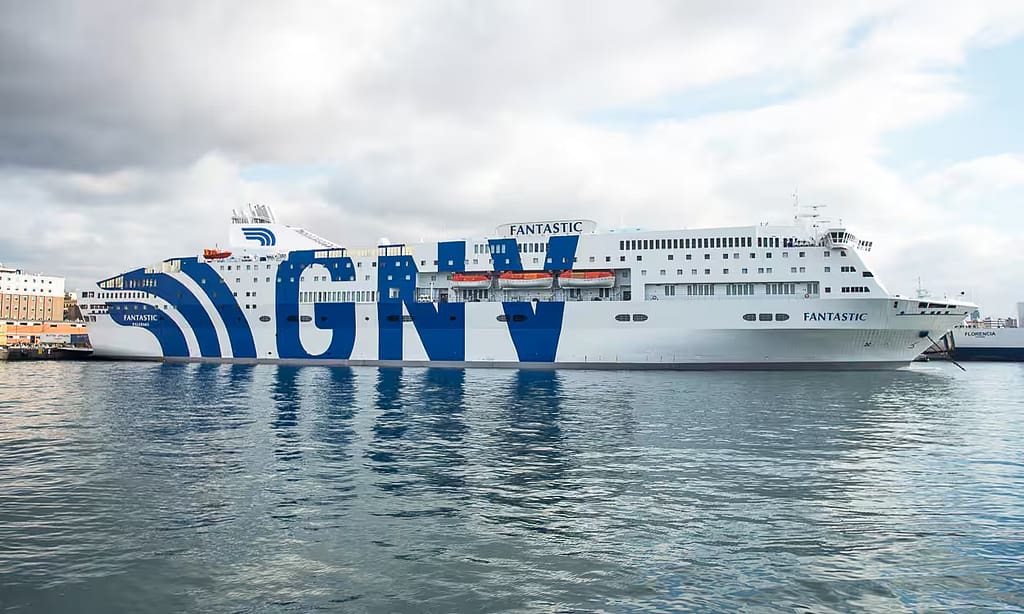
A routine Mediterranean crossing turned into a chilling security scare over the weekend, after a cruise ship carrying British tourists was caught up in what investigators fear could have been a Russian-linked hijacking attempt. The vessel, Fantastic, operated by Italian ferry company GNV, was left stranded for more than ten hours in the French port of Sète, leaving hundreds of passengers confused, frustrated, and completely in the dark.
Behind the scenes, however, authorities were dealing with something far more serious than a mechanical delay. French intelligence services were urgently probing whether the ship’s computer systems had been compromised using a sophisticated hacking device—one allegedly capable of allowing remote control of the vessel. Yes, you read that right. Remote control. On a passenger ship carrying 650 people.
According to French prosecutors and reporting by Le Parisien, two men were arrested on December 12 by the General Directorate for Internal Security (DGSI). The suspects were allegedly found in possession of advanced technological equipment—described as resembling a USB stick or external hard drive—believed to have been used to infiltrate the ferry’s automated systems. Investigators suspect the device was installed after access to the ship’s computer network was gained.
One suspect, a Bulgarian national, was later released without charge. The second, a Latvian man in his twenties, was not so lucky. Recently hired as a trainee sailor by GNV, he was transferred to Paris and formally charged with a series of heavy offences, including organised crime involving an automated data processing system, criminal conspiracy, and possession of software designed to attack computer systems. These are not minor allegations.
Crucially, investigators are examining whether the suspected cyber sabotage was carried out on behalf of a foreign intelligence service. Russia is reportedly at the top of the list. French authorities have made no secret of their concerns, especially given Moscow’s documented history of recruiting proxies from Eastern Europe to conduct espionage and destabilisation operations across Europe. This wouldn’t be uncharted territory.
The Fantastic, which was due to depart at 6:00am on December 13 for Béjaïa in Algeria, remained immobilised for over ten hours while investigators stormed the vessel, detained suspects, and placed the ship under seal. The Paris prosecutor’s office said this was necessary to assess whether the ship’s systems had been compromised and to ensure passenger safety wasn’t at risk.
Meanwhile, passengers were left fuming. Many had travelled overnight—some up to 14 hours—from across France and beyond, including the UK, Belgium, Germany, and the Netherlands. They were only informed at 1:00am that the ship wouldn’t be leaving on schedule.
Eventually, the vessel was cleared to sail later that evening, once immediate security concerns were addressed. The seized technological device has now been sent for forensic analysis, and cybercrime investigators are continuing their work in coordination with Italian authorities.
At this stage, no direct link to Russian intelligence has been formally established. The suspect’s lawyer, Thibault Bailly, has urged caution, saying the investigation will show the situation is “not as alarming as it initially appeared.” Still, the idea that a passenger ship could be hacked and potentially weaponised is enough to make anyone uneasy.