Why 21.7 Million Americans Are Hitting the High Seas in 2026
The cruise industry isn’t just riding a wave right now — it’s straight-up surfing a tsunami of demand. According to new projections from AAA, a staggering 21.7 million Americans are expected to take an ocean cruise in 2026, setting yet another all-time record and marking the fourth consecutive year of growth for the sector. That follows an already impressive 2025, with 20.7 million U.S. travelers forecast to sail, beating earlier expectations and confirming that cruising is no longer a niche vacation choice — it’s mainstream travel culture.
AAA Forecasts Another Record Year for Cruises
What’s driving this momentum is more than just pent-up demand from the pandemic years. AAA data shows an 8.4% jump in cruise passengers from 2024 to 2025, followed by a projected 4.5% increase into 2026. Those aren’t small bumps. That’s sustained, healthy growth in a mature travel segment, and it reflects how ocean cruising has evolved into an all-in-one vacation solution. As AAA Vice President of Travel Stacey Barber puts it, travelers are booking cruises for everything from milestone anniversaries in the Caribbean to once-in-a-lifetime Alaska family reunions. Convenience, variety, and value are doing a lot of heavy lifting here.

A Breakdown of U.S. Cruise Passenger Demographics
The demographics tell an equally compelling story. While cruising still skews older — about 65% of adult U.S. cruise passengers are 55 and up — younger travelers are increasingly getting on board. Roughly 27% fall into the 35–54 age range, and 7% are between 18 and 34. And no, most people aren’t cruising solo. Nearly half of American cruise passengers travel as couples, 20% bring kids along, and group cruises continue to grow thanks to reunions, celebrations, and multigenerational trips. Cruising has become social again, and honestly, that’s part of the magic.
What Types of Cruises Americans Are Booking?
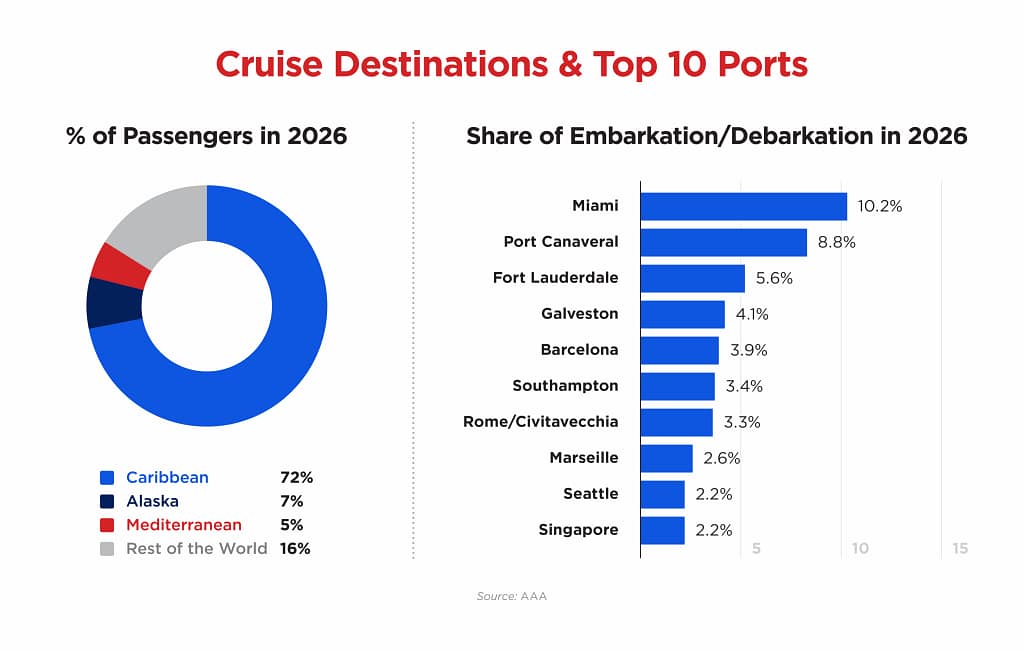
Ship size and style also play a huge role in where travelers are booking. Mega cruise ships — the floating cities packed with water parks, Broadway-style shows, and endless dining — are booming, especially in the Caribbean, Mediterranean, and Northern Europe. The Caribbean remains the undisputed heavyweight champ, accounting for 72% of U.S. cruise passengers, which explains why ports like Miami, Port Canaveral, and Fort Lauderdale are the busiest cruise hubs on the planet. Meanwhile, smaller ships dominate in Northern Europe and luxury-focused Mediterranean itineraries, where travelers want intimate ports and expedition-style experiences. Alaska stands apart, favoring midsize vessels due to its seasonal nature and environmental considerations.
Timing Is Everything: When Cruise Prices Spike and Why It Matters
Timing matters too, especially if you care about price. Caribbean peak cruise season runs from November through March, dodging hurricane season and soaking up winter escape demand. Summer Caribbean cruises often cost more despite being off-peak, largely because families flood the market while ship capacity drops. Alaska’s cruise season is even tighter, running from April to October, which naturally drives up fares. Many savvy cruisers balance both worlds — Alaska in the summer, Caribbean in the winter — to maximize value and experience.
Cruise Satisfaction and Repeat Booking Trends
So why do people keep coming back? The satisfaction stats say it all. Ninety percent of U.S. cruise passengers rate their experience as good or very good, and 91% have cruised more than once. That’s loyalty most travel brands would kill for. Couples love the built-in date nights. Families appreciate the kid-friendly amenities and predictable budgeting. Younger, adventure-seeking travelers are jumping on expedition cruises to the Arctic and Antarctica, proving cruising isn’t just shuffleboard and buffet lines anymore.
Bottom line: cruising isn’t slowing down anytime soon. If anything, it’s just getting warmed up.