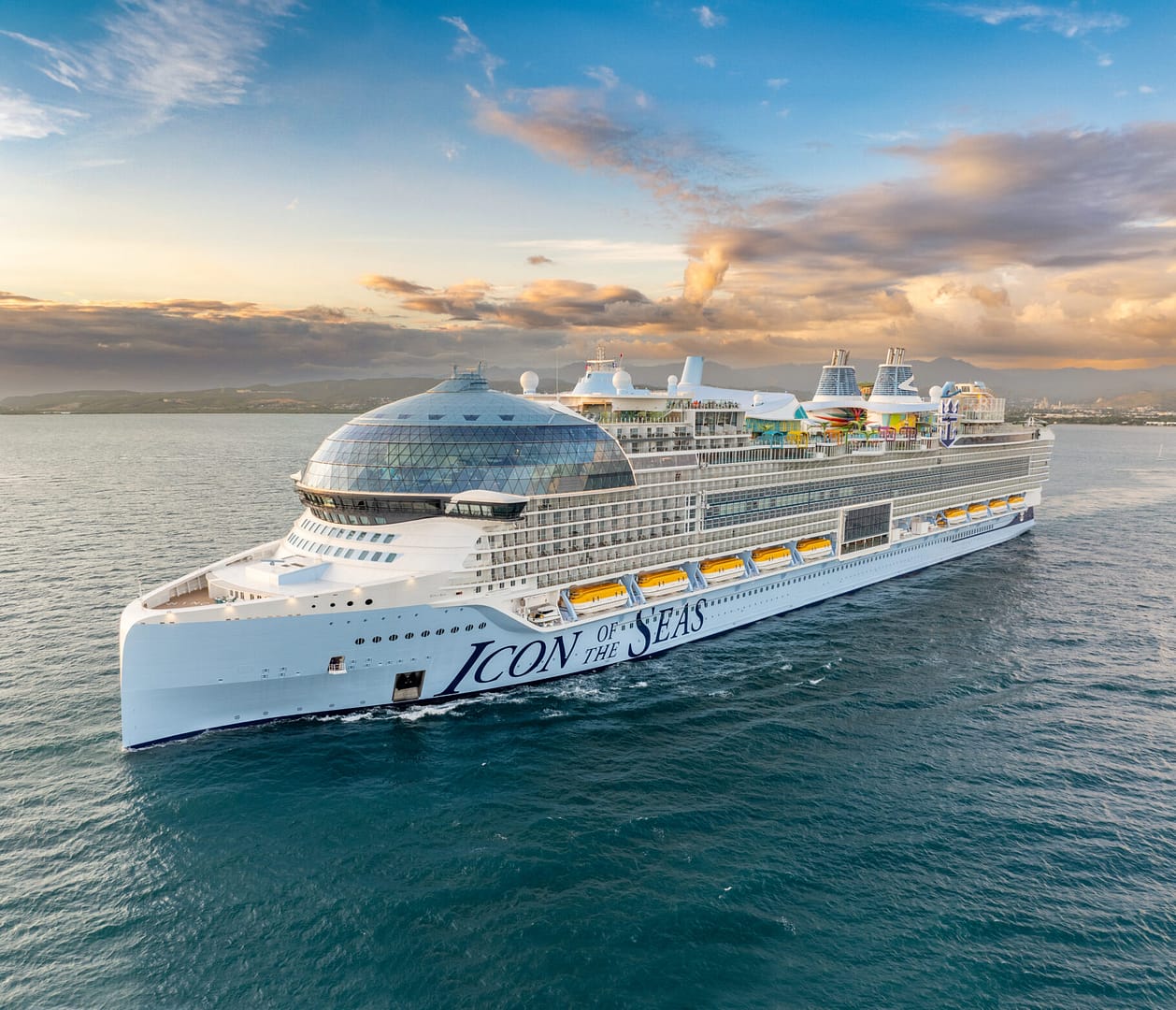
The internet loves a spectacle, but sometimes the spectacle turns into a gut punch. That’s exactly what happened when an image of the world’s largest cruise ship, Royal Caribbean’s Icon of the Seas, surfaced on Reddit – and immediately got roasted. Instead of marveling at the $2 billion mega-ship’s engineering, users on the r/Anticonsumption subreddit zeroed in on its sheer excess. Yet even the harshest takes acknowledged something important: this vessel is an undeniable technical achievement.
Engineering on an Unprecedented Scale
Icon of the Seas ties for the largest cruise ship ever built (along with sister ship Star of the Seas), stretching nearly 1,200 feet long and carrying up to 10,000 passengers and crew. That scale alone is jaw-dropping. For supporters, it represents how far maritime engineering has come — floating neighborhoods, complex water systems, and safety technology that simply didn’t exist a generation ago.
Of course, critics were quick to point out that size comes with consequences. Comments about waste, sewage, and environmental strain flooded the thread, and those concerns aren’t pulled out of thin air. A typical 3,000-passenger cruise ship can generate enough sewage each week to fill around ten swimming pools. Multiply that by Icon of the Seas’ capacity, and it’s easy to see why people are uneasy. Still, environmental scrutiny has pushed the industry to evolve faster than it once did.
One area where Royal Caribbean is clearly trying to respond is fuel. Icon of the Seas runs on liquefied natural gas, or LNG, which produces fewer sulfur oxides and particulate emissions than traditional marine diesel. While environmentalists rightly note the risks of methane leakage — a greenhouse gas far more potent than carbon dioxide — LNG is widely viewed as a transitional fuel. It’s not perfect, but it’s a step toward cleaner operations while alternative technologies continue to develop.
Noise pollution and its impact on marine life also came up in the Reddit discussion. Large ships can disrupt whale migrations and breeding patterns, a serious issue that cruise lines can’t ignore anymore. The positive news is that quieter propulsion systems and hull designs are already being tested across the industry, driven in part by growing public pressure like the kind seen in this viral thread.
Consumer Pressure Reshaping the Cruise Industry
Jokes about Icon of the Seas looking like a “giant hamster cage” or an “overpriced nineties toy” hint at something deeper. People are paying attention. They’re questioning not just aesthetics, but sustainability, regulation, and corporate responsibility. That scrutiny matters. Cruise operators are increasingly aware that future customers want more than flashy slides and record-breaking size — they want reassurance that their vacation isn’t harming the planet they’re trying to enjoy.
That growing demand for environmental attention may help explain a notable pivot in Royal Caribbean’s strategy. While the company continues to build massive vessels, executives have confirmed they’re actively designing a new class of smaller ships dubbed the Discovery Class. These vessels would be significantly smaller than Icon-class giants, enabling access to more ports and offering more versatile itineraries, and are intended to replace some of the fleet’s aging smaller ships.
Whether that shift is driven more by customer demand, operational flexibility, or mounting pressure to be more sustainable, one thing is clear: Royal Caribbean is preparing for a future where not every new ship needs to be the biggest. And given how vocal the public has become about environmental impacts, it wouldn’t be surprising if that pressure — amplified by moments like the Icon backlash — helped nudge the industry toward a smarter, greener horizon.