Undercover Robots are Changing the Cruise Industry
Royal Caribbean’s push into “undercover robots” just got a whole lot more real—and honestly, a bit more fascinating.
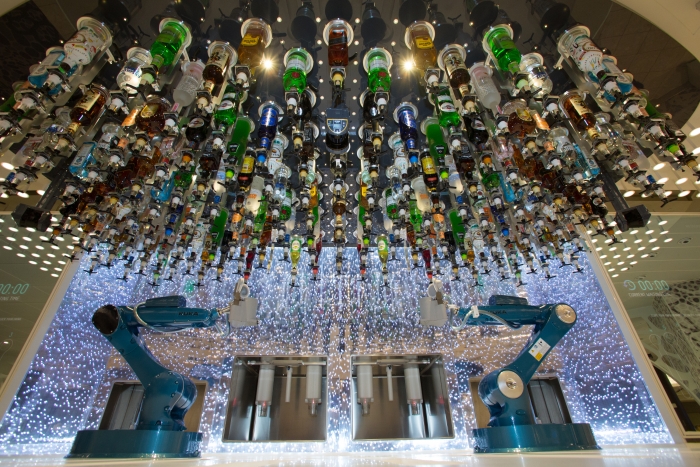
Royal Caribbean International is now integrating so-called “cobots,” or collaborative robots, across its massive Icon-class ships. But here’s the twist: you probably won’t even notice them. These aren’t flashy robot bartenders or dancing machines – although some ships have those, too. No, these “cobots” are designed to blend into the background, working behind the scenes to keep operations smooth and efficient
A newly released behind-the-scenes video shows exactly how these cobots operate across ships like the upcoming Icon-class vessels. And spoiler alert: they’re not just cleaning floors in the background—they’re quietly reshaping entertainment, sustainability, and even fuel efficiency onboard.
This isn’t sci-fi. It’s already happening at sea.
What Are Cobots?
Cobots are essentially robotic assistants built to work alongside human crew, not replace them. Think of them as the ultimate support staff—handling repetitive, time-consuming tasks like cleaning and sanitation while human workers focus on guest experience.
According to recent reports, Royal Caribbean plans to deploy these robotic cleaners across all ships in its Icon class, the largest cruise ships ever built.
And yeah, this is a big deal. These ships can carry up to roughly 7,600 passengers at full capacity, plus over 2,000 crew members. That’s basically a floating city—so keeping everything spotless is no small feat
The Different Classes of Robots
According to the video, robots on Royal Caribbean ships fall into two main categories: guest-facing entertainment tech and behind-the-scenes operational machines.
Entertainment Cobots
On the entertainment side, robotic systems are already being used in massive productions. Think moving LED panels, synchronized robotic arms, and dynamic stage elements that interact with performers in real time.
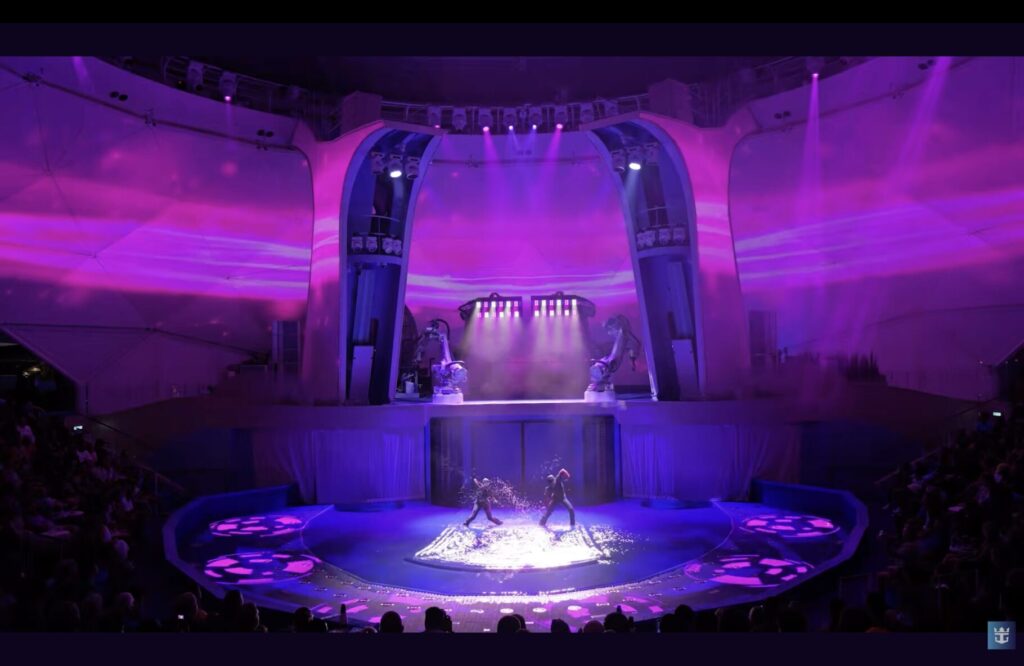
On Icon-class ships, these robots are embedded into venues like the AquaTheater, where they don’t just enhance visuals—they’re actually part of the storytelling. Industry insiders say these machines are “as important as the entertainers,” helping create immersive shows that hit harder than anything cruise passengers have seen before.
In plain terms? The stage is no longer just a stage—it’s a fully automated experience.
Cleaning and Maintenance Cobots
Now let’s talk about the less flashy—but arguably more important—side of this tech rollout.
Robotic cleaners, nicknamed “Bob” and “Betsy,” are being deployed across Icon-class ships to handle sanitation duties. These aren’t random Roombas bumping into walls—they operate using mapped ship layouts and QR-coded zones that tell them exactly where to clean and what task to perform.
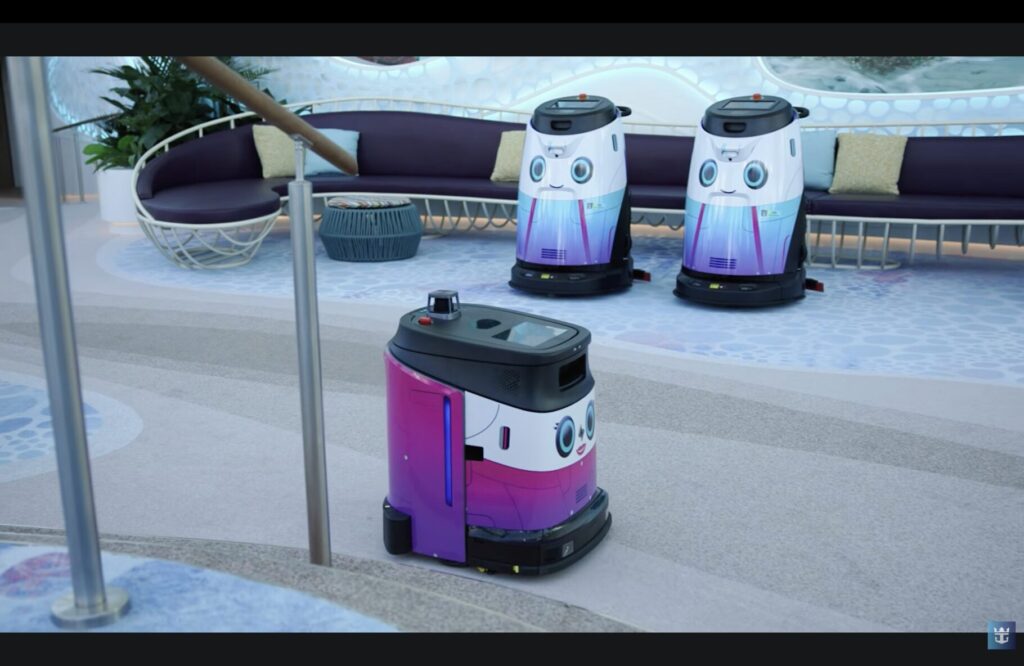
This lines up directly with Royal Caribbean’s broader plan to roll out robotic cleaners fleetwide on these mega-ships. By offloading repetitive cleaning tasks to machines, human crew members can spend more time interacting with guests—something cruise lines are betting heavily on as they compete for premium travelers.
Underwater Robots
Here’s the part most passengers would never even think about.
Some of the most impactful robots aren’t inside the ship at all—they’re underneath it.
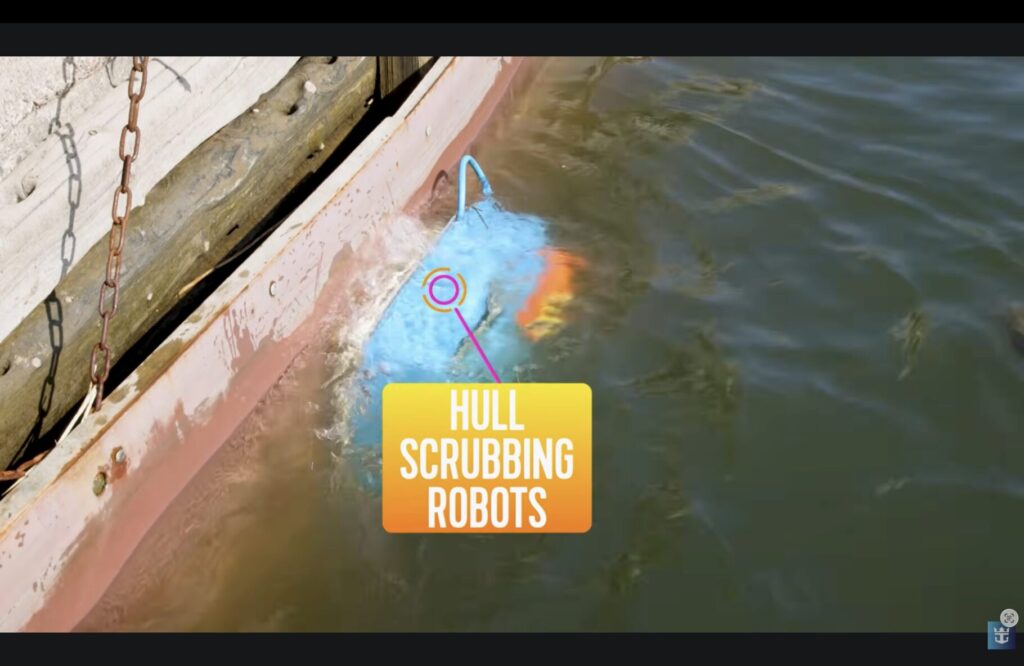
Royal Caribbean is now using underwater robotic drones to scrub the ship’s hull, a critical task that directly affects fuel efficiency. A cleaner hull reduces drag in the water, which means lower fuel consumption and improved environmental performance. Roughly half of a cruise ship’s energy is used for propulsion, and up to 80% of that energy goes toward overcoming water friction. Keeping the hull clean isn’t just maintenance—it’s a major sustainability play.
Why This Matters for the Future of Cruising
All of this ties into a much bigger shift happening across the cruise industry.
Royal Caribbean isn’t just adding robots for the sake of innovation—it’s building a smarter, more efficient floating ecosystem. Cobots help improve safety, reduce operational strain, and create a more seamless guest experience without being intrusive. And importantly, company leadership has made it clear: robots aren’t replacing crew—they’re enhancing them.
From high-tech stage productions to AI-guided cleaning systems and even underwater maintenance drones, Royal Caribbean’s cobots are quietly transforming what it means to cruise in 2026.
You may not see them. You may not hear them.
But make no mistake—they’re everywhere.