Seward Residents Gather to Honor a Whale as Questions Swirl Over Cruise Ship Strike
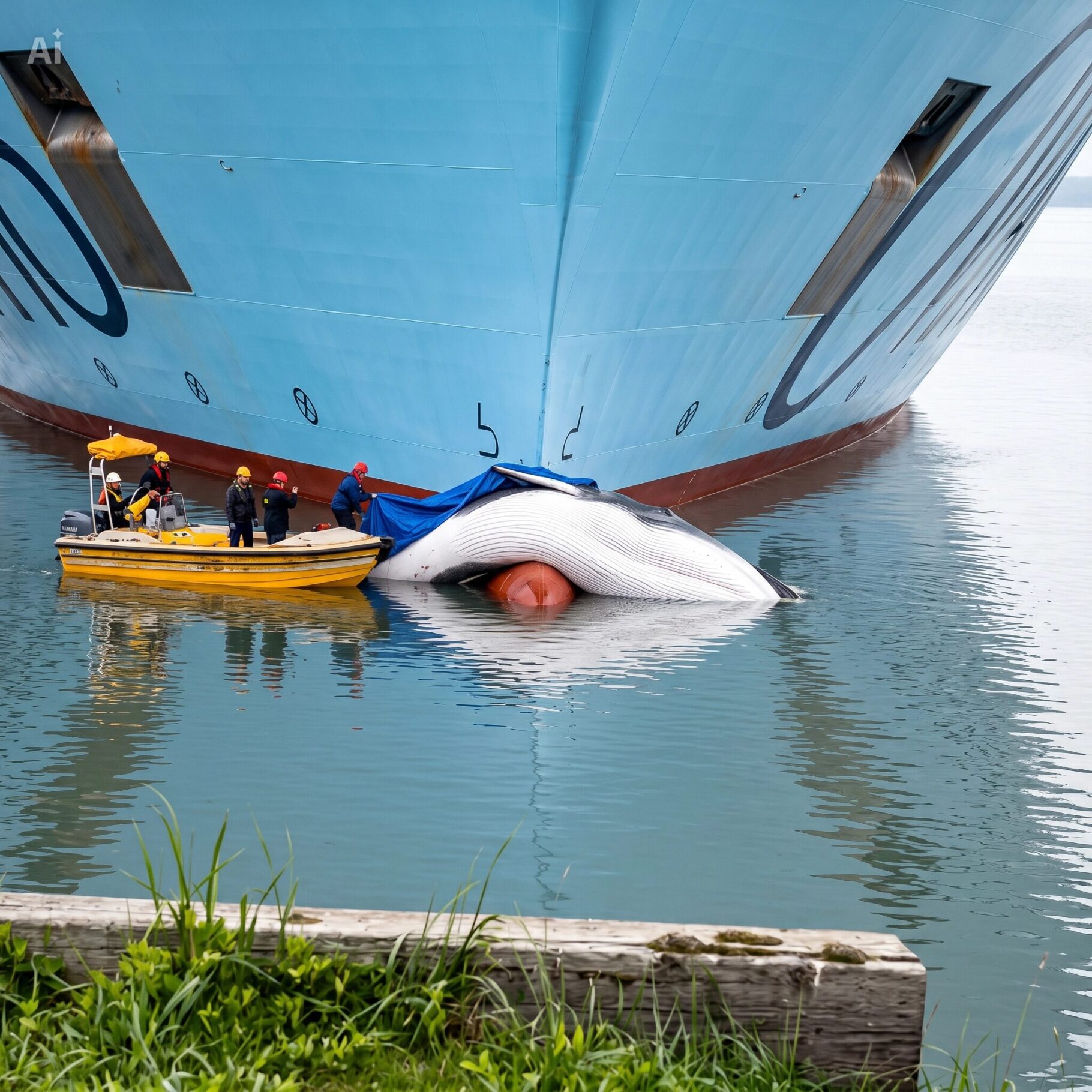
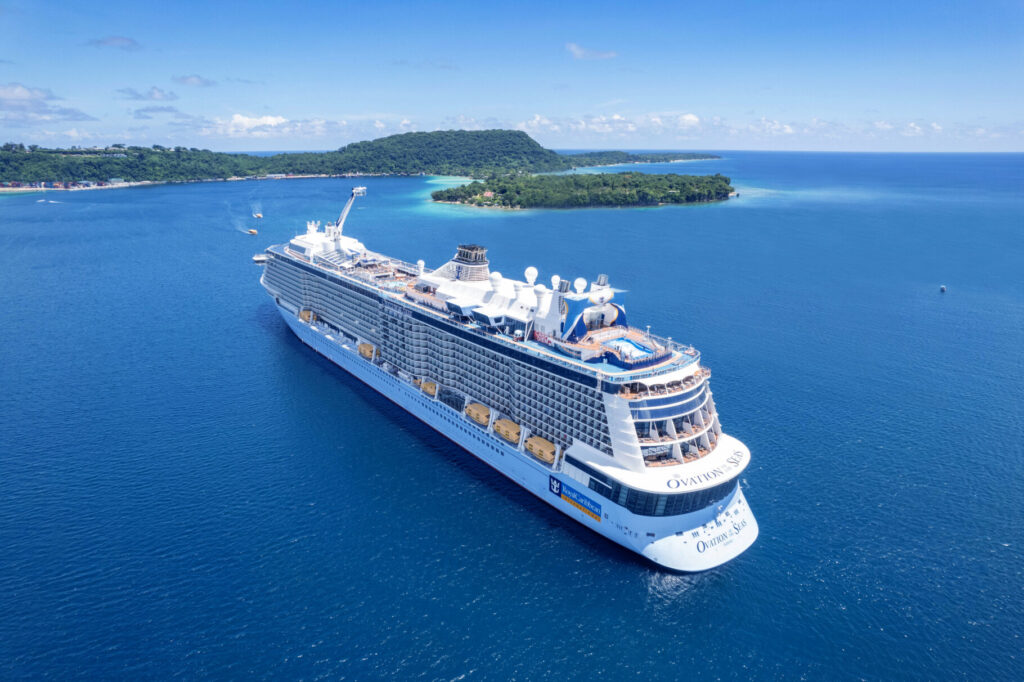
What began as a routine cruise ship arrival in Seward, Alaska, quickly became one of the most heartbreaking wildlife stories of the summer. On June 19, Royal Caribbean’s Ovation of the Seas arrived at port with the body of a 61-foot endangered fin whale draped across its bulbous bow. Federal officials later confirmed the whale was an adult female that was pregnant, transforming an already tragic incident into one that deeply affected residents, conservationists, and marine scientists alike.
The emotional impact has been especially strong in Seward, where residents organized a public memorial to honor the whale and draw attention to the growing threat of vessel strikes in Alaska’s coastal waters. Community members, wildlife advocates, and local leaders have described the whale’s death as a painful reminder that increasing cruise traffic and fragile marine ecosystems are colliding in ways that can have irreversible consequences. Organizers say the memorial is intended not only to mourn the loss of the endangered animal and her unborn calf, but also to encourage meaningful conversations about how future tragedies can be prevented.
NOAA’s Preliminary Necropsy Reveals Fatal Blunt Force Trauma
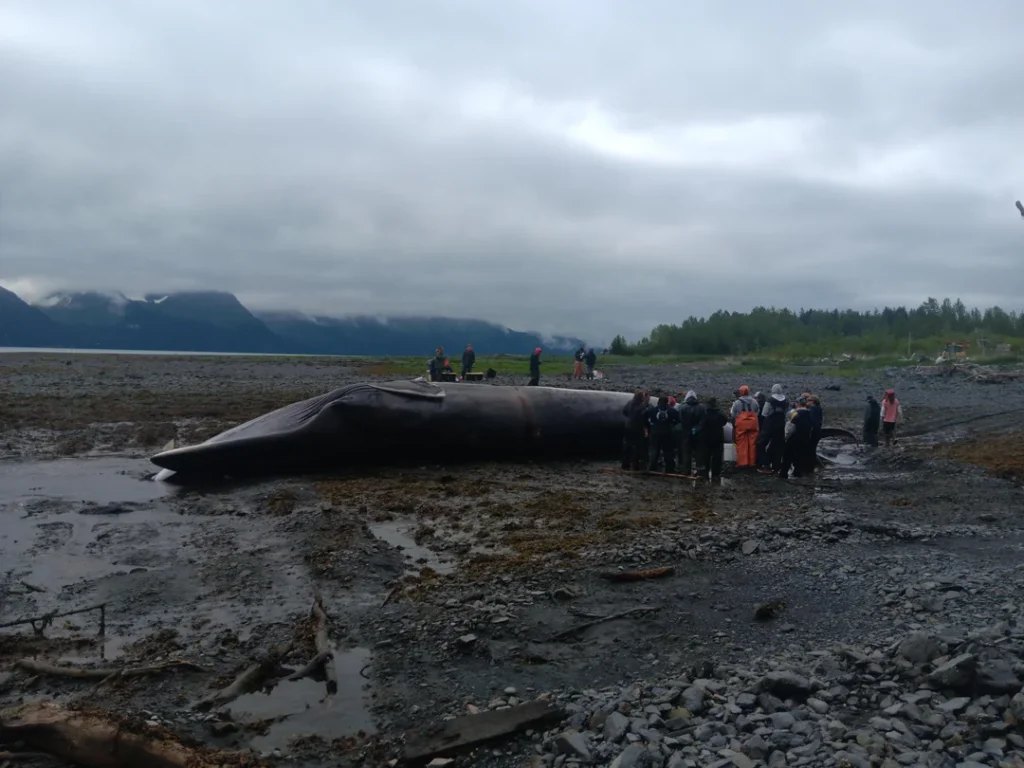
Marine veterinarians and biologists from NOAA Fisheries, the Alaska SeaLife Center, and Alaska Veterinary Pathology Services conducted a necropsy shortly after the whale was brought ashore. Their preliminary findings indicate the whale suffered severe blunt force trauma to the jaw, spine, and ribs—injuries consistent with a high-impact vessel strike.
Scientists also determined the whale was freshly deceased and in good nutritional condition, showing no obvious signs of disease or prolonged illness before the collision. The examination further confirmed the whale was pregnant, making the incident an even greater loss for a species already protected under the Endangered Species Act and the Marine Mammal Protection Act. Additional laboratory testing and tissue analysis will continue before NOAA releases its final report.
Royal Caribbean Says It Is Cooperating With Investigators
Royal Caribbean has acknowledged the incident and expressed sadness over the whale’s death. In a public statement, the cruise line said it immediately notified the appropriate authorities after discovering the whale and emphasized that it takes impacts on marine ecosystems seriously. The company also stated it is fully cooperating with NOAA Fisheries throughout the federal investigation.
At this stage, there is no indication that investigators have determined whether any maritime regulations were violated. Instead, the focus remains on reconstructing exactly when and where the collision occurred, the vessel’s operating conditions at the time, and whether additional safety measures could reduce similar incidents in the future.
Federal Investigation Will Examine Every Detail
NOAA Fisheries’ Office of Law Enforcement has opened a formal investigation into the incident. Investigators are expected to review voyage data, navigational records, weather conditions, ship speed, crew observations, and necropsy findings to establish the sequence of events leading to the whale’s death. Officials have also asked anyone with relevant information to contact federal investigators as the case remains active.
The investigation will determine whether the whale was struck directly by Ovation of the Seas or whether additional factors contributed to the incident. While preliminary evidence strongly supports a fatal vessel strike, NOAA has indicated that the complete investigation must be finished before any enforcement decisions or policy recommendations are made.
Ship-Speed Limits Become the Center of the Debate
In the aftermath of the tragedy, conservation organizations are renewing calls for mandatory ship-speed limits throughout important whale habitat in Alaska. The Center for Biological Diversity has urged Royal Caribbean and other cruise operators to voluntarily limit vessel speeds to 10 knots (11.5 mph) or less when traveling through known whale migration corridors, arguing that slower speeds dramatically reduce both the likelihood of collisions and the severity of injuries when strikes do occur.
Scientific research has consistently shown that vessel speed is one of the most important factors influencing whale-strike mortality. At lower speeds, crews have more time to detect whales at the surface, ships require less stopping distance, and impacts are significantly less likely to be fatal. While Alaska currently lacks broad mandatory speed restrictions for large cruise ships in many whale habitats, environmental groups say this latest incident demonstrates why stronger protections deserve renewed consideration.
For now, the Seward memorial serves as both a tribute and a warning. As investigators continue their work, the death of this pregnant fin whale has become a powerful symbol of the ongoing challenge of balancing Alaska’s booming cruise tourism with the protection of one of the ocean’s most iconic endangered species.