Is Nassau Losing Cruise Dollars to Paradise Island?
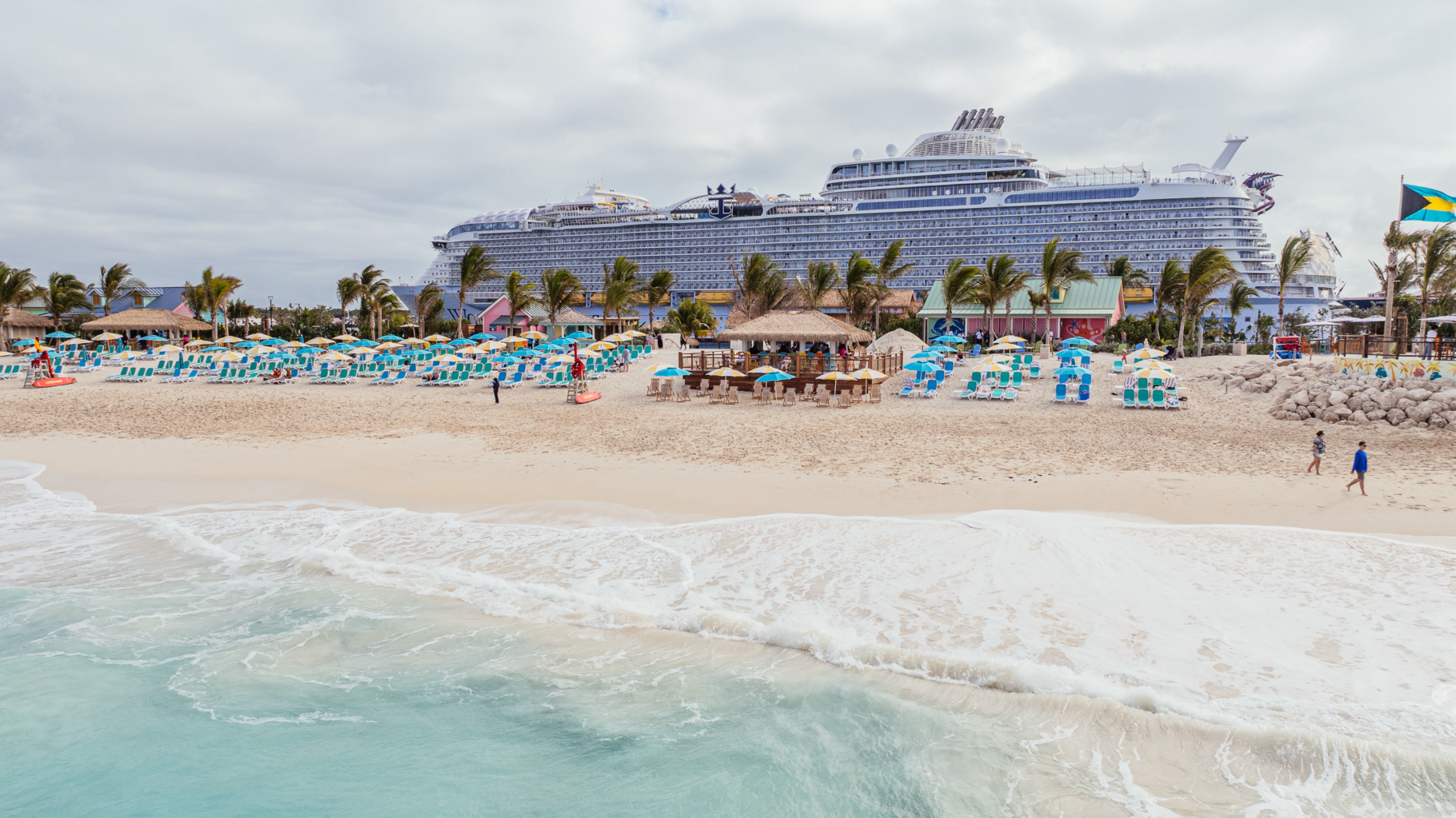
Royal Caribbean’s Royal Beach Club Paradise Island is no longer a proposal on a government presentation board. The 17-acre attraction officially opened to visitors in December 2025, bringing an all-inclusive beach experience just across the harbour from downtown Nassau — and putting a very real question in front of Bahamian merchants: when cruise passengers have everything they need on the beach, how much of that spending still reaches Bay Street?
Nassau’s cruise economy is booming, but so is the competition for the visitor’s limited hours onshore. The Bahamas recorded a record 12.5 million visitors in 2025, according to the Ministry of Tourism, with arrivals up 11.4% from the previous year and more than 70% above 2019 levels.
So there is plenty of money coming through the door. The fight is over where that money goes.
A Beach Day Designed to Keep Visitors on the Property
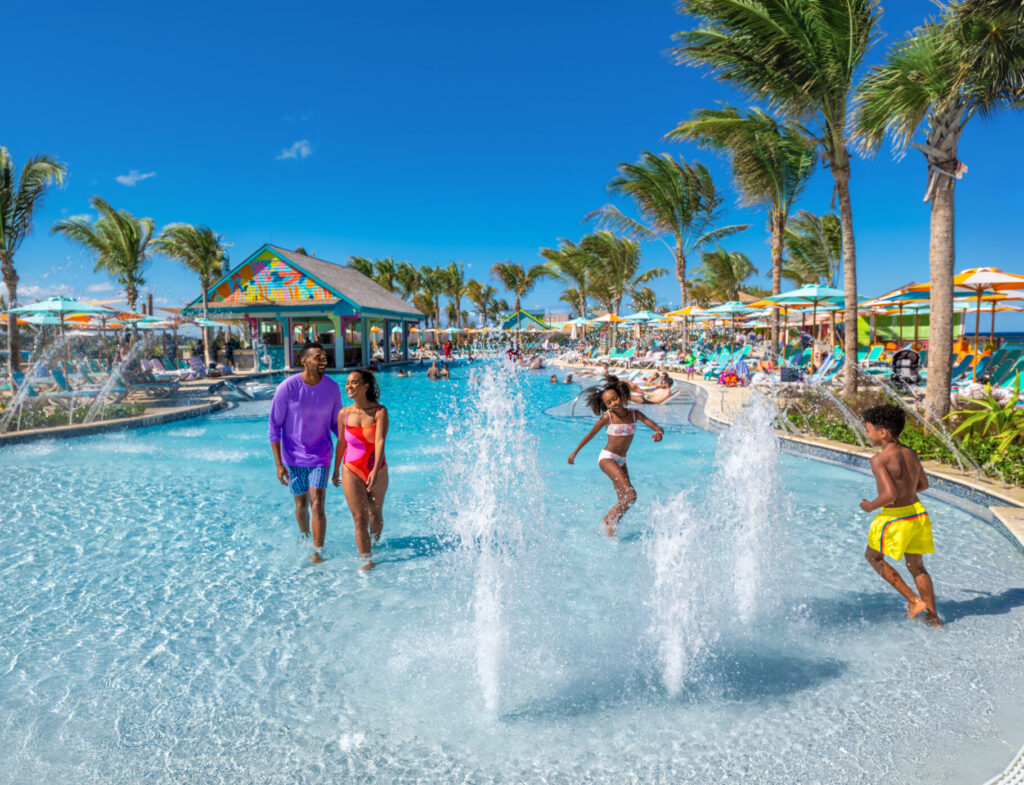
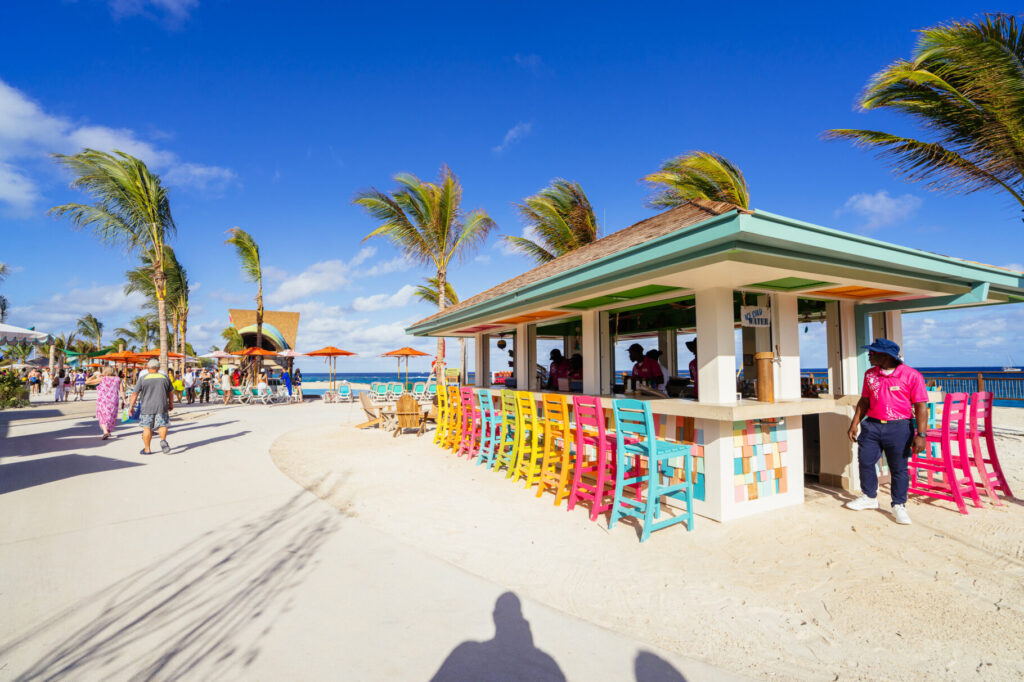
The appeal of Royal Beach Club Paradise Island is hardly a mystery. Royal Caribbean markets it as an all-inclusive shore excursion with two beaches, three pools, multiple bars, all-day dining, entertainment, Wi-Fi, lounge chairs, towels and round-trip transportation from the cruise port.
For a cruise passenger with limited time in Nassau, that’s a pretty compelling proposition. Instead of figuring out a taxi, negotiating with a tour operator, finding lunch and then worrying about getting back to the ship on time, the traveler can essentially step off the ship, head to the club and spend the day inside one controlled experience.
And that’s precisely what makes some downtown businesses nervous.
The concern isn’t necessarily that Nassau suddenly lacks tourists. It’s that cruise passengers are a finite pool of potential customers during each port call, and every hour spent at a private beach is an hour they aren’t browsing the Straw Market, buying souvenirs on Bay Street, eating at a downtown restaurant or booking an independent excursion. Those concerns aren’t coming out of nowhere. In July 2026, Straw Market representatives said the problem facing vendors was not simply the number of cruise passengers but the fact that many visitors don’t even realize the market is only steps from Nassau Cruise Port.
That detail suggests the downtown tourism economy has another problem to solve: getting visitors to leave the port area and discover what Nassau’s small businesses offer.
The Government’s Counterargument: There Are Still Plenty of Tourists
Deputy Prime Minister Chester Cooper has pushed back on the idea that the beach club automatically spells trouble for downtown Nassau. Before the club opened, Cooper argued that the country was effectively competing to get people off the cruise ships in the first place and that the Royal Beach Club needed to become a “win-win” for Bahamian businesses and Royal Caribbean.
There is some hard capacity math behind that argument.
The beach club can accommodate roughly 3,500 to 4,000 guests at a time, according to Royal Beach Club president Philip Simon. That’s a significant number, but it is not the entire Nassau cruise market. A ship can bring thousands of passengers into Nassau, and not every passenger wants the same experience. Some want a private-style beach day. Others want shopping, history, food, snorkeling, sightseeing or the distinctly Nassau experience of wandering around downtown.
The challenge for Bay Street vendors, then, may be less about whether tourists exist and more about whether the downtown experience is compelling enough to pull them away from the beach club.
The Part of the Story That Changes the Equation
Here’s where the Royal Beach Club story gets more complicated than a simple “cruise line versus local vendors” argument.
The project was structured as a public-private partnership in which Bahamians hold 49% ownership, while Royal Caribbean holds the majority stake. The government has also said that one percent of gross revenues goes toward the Tourism Development Fund. More than 500 Bahamians were employed at the attraction around its opening, with additional local companies involved in areas including food and beverage, security, landscaping, IT, ticketing and other services.
That is a very different economic model from simply having another foreign-owned attraction operating in Nassau.
It means some of the money spent inside the beach club is intended to circulate through Bahamian workers, investors and businesses. Whether that ultimately compensates for spending that might otherwise have reached downtown merchants is a separate question — and one that will require actual operating data rather than competing sound bites.
The Numbers to Watch Now
One of the most revealing developments came in June 2026, when Royal Caribbean said the planned public offering allowing Bahamians to invest in the beach club had been pushed toward the end of the year so investors could first see how the operation performs financially.
That could become a major moment.
If Bahamian investors eventually get a meaningful financial stake based on the attraction’s actual performance, the ownership argument becomes much easier to measure. At the same time, downtown vendors will be watching their own numbers: daily sales, cruise-day traffic, average customer spending and whether passengers are arriving downtown after visiting Paradise Island.
There is also a broader lesson here for Nassau tourism. The Straw Market’s recent complaints about promotion suggest that local businesses cannot simply wait for cruise passengers to wander their way downtown. They need visibility, transportation links, clear directions and compelling experiences that tourists cannot get by staying inside a resort-style excursion.
So, Is Royal Beach Club a Win-Win?
The honest answer right now is that both sides have a legitimate economic argument, and the long-term result isn’t settled by the club’s opening alone.
Royal Beach Club Paradise Island has created hundreds of Bahamian jobs, established a 49% Bahamian ownership structure and brought additional locally operated businesses into a major cruise tourism project. But the concerns from Bay Street vendors deserve attention too. A cruise passenger who spends six hours at an all-inclusive beach club has fewer opportunities — and less incentive — to spend those same hours downtown.
The interesting question for Nassau isn’t necessarily whether tourists should choose the beach or Bay Street. It’s whether the island can build a tourism system where the beach club, cruise port, downtown merchants, taxi operators, restaurants, artisans and independent tour companies all have reasons to benefit from the same visitor.
And with 12.5 million visitors now moving through The Bahamas in a record tourism environment, this isn’t a debate happening on the margins. It could become a blueprint — or a warning — for how Caribbean destinations handle the next generation of cruise tourism.
Check out our favorite Nassau resort!