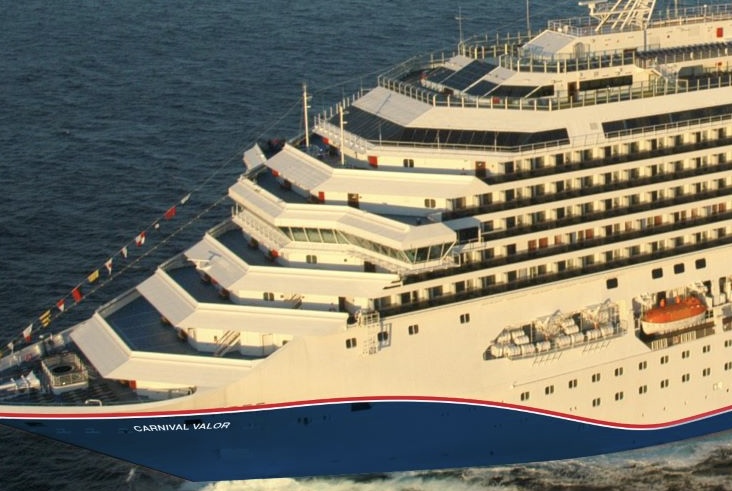
Carnival Valor Swerves to Avoid Stalled Cargo Ship
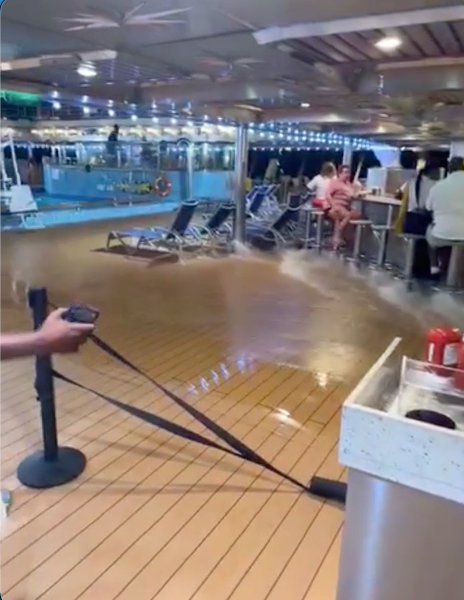
A dramatic movement aboard Carnival Valor was triggered when the cruise ship had to make a sudden maneuver to avoid a stalled cargo ship while navigating the Mississippi River. The ship’s abrupt change in course caused it to heel sharply to one side, sending water surging out of the onboard pool and across the deck. Video of the moment quickly circulated online, making the movement look even more alarming than it may have been from a technical stability standpoint.
Footage circulating online has understandably left some passengers wondering a pretty basic question: How does a cruise ship this enormous suddenly lean so far without tipping over?
The short answer is that cruise ships are engineered with several layers of stability protection. The longer answer is a fascinating mix of naval architecture, ballast systems, watertight compartments, computerized monitoring, propulsion and, on many ships, underwater stabilizer fins. The important distinction is that a ship listing or heeling is not automatically the same thing as being in danger of capsizing. A vessel can experience a dramatic-looking change in angle and still have substantial stability reserves.
Why the Pool Water Makes the Video Look So Dramatic
The swimming pool may actually be one of the best visual indicators of how much the ship moved.
Water has a level surface, so when the ship suddenly heels to one side, the pool water doesn’t simply stay put. It rushes toward the lower side, producing the spectacular wave seen in videos of the incident. Passengers, deck furniture and loose objects can make the movement look even more dramatic.
That doesn’t necessarily mean the ship itself was close to capsizing.
What Actually Keeps a Cruise Ship Upright?
A ship’s stability depends heavily on the relationship between its center of gravity, center of buoyancy and metacentric height. In plain English, engineers design the vessel so that when it is pushed away from upright, the forces created by buoyancy work to bring it back toward its original position.
The International Maritime Organization’s mandatory stability framework includes the 2008 Intact Stability Code, while SOLAS requirements address ship construction, subdivision, buoyancy and stability. Passenger ships are also designed with watertight subdivision so that specified flooding scenarios can be survived without the vessel losing its required stability.
Parts of Cruise Ship Work Together for Stabilization
The Hull
The stability system begins with the hull itself. Modern cruise ships have broad hulls designed to displace enormous quantities of water while keeping the vessel’s weight distribution under control. Heavy machinery and other major weights are positioned relatively low, helping keep the ship’s center of gravity in a favorable position.
Ballast
Then there are ballast tanks. Ballast water can be moved around the ship to help manage trim, weight distribution and stability. The IMO notes that ballast water is used to stabilize ships, reduce hull stresses and improve propulsion and maneuverability while compensating for changes in weight during a voyage. Carnival has also highlighted technology that automatically optimizes a vessel’s trim by transferring ballast water internally. That technology is primarily discussed in the context of hydrodynamic efficiency, but it illustrates how modern ships use software and engineering systems to continually manage their operating condition.
Stabilizers
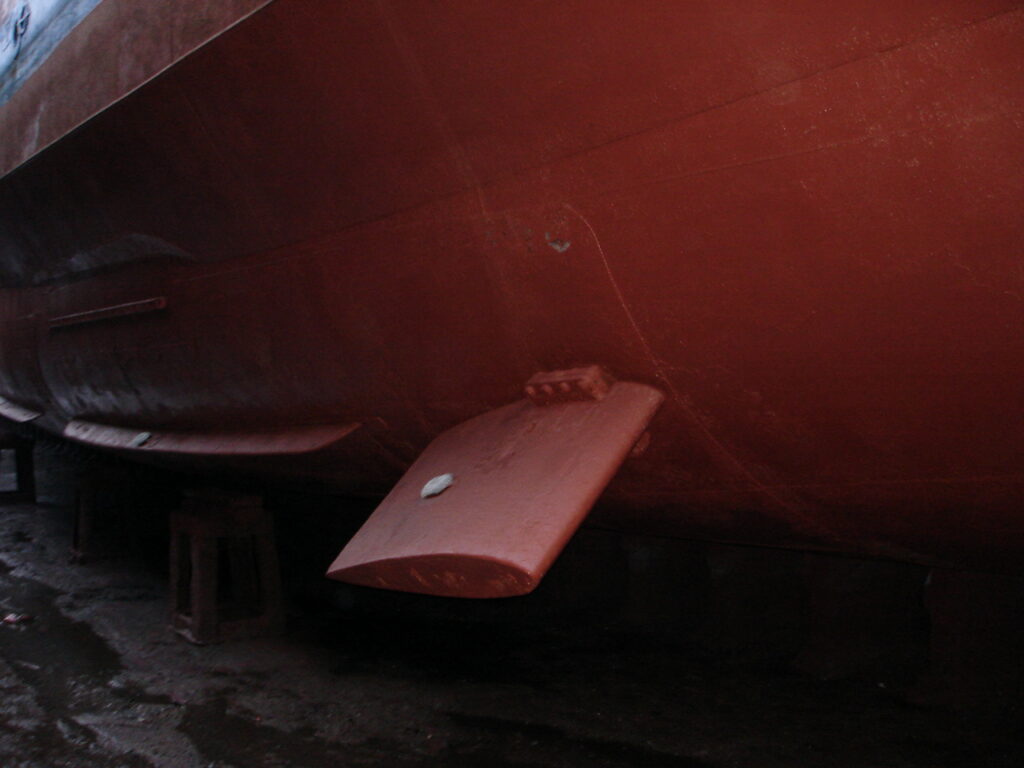
Then comes one of the most interesting pieces of cruise ship technology: fin stabilizers. These retractable underwater fins extend from the sides of many large cruise ships. As the vessel moves through the water, the fins generate hydrodynamic forces that counteract rolling caused by waves and other forces. Think of them as tiny underwater airplane wings, except their job isn’t to make the ship fly. Their job is to make the ship’s ride less like a roller coaster. Modern stabilizer systems can adjust the angle of the fins automatically as conditions change. Recent cruise-industry reporting notes that these systems are designed to reduce side-to-side rolling and can respond to wave movement.
But there is an important catch: stabilizer fins are not designed to magically prevent every sudden list. They are most useful when the ship is moving through water and experiencing rolling motion. A sharp maneuver, wind force, wave interaction or other sudden change can still produce a noticeable heel before the vessel’s various systems and the ship’s inherent stability characteristics bring it back toward equilibrium.
The Takeaway from Carnival Valor
The most useful lesson from the video isn’t that cruise ships are unstable. It’s that large ships can move more than passengers expect.
A sudden turn or change in forces can produce a very noticeable heel, even on a ship weighing tens of thousands of tons. Seeing pool water rush dramatically across a deck is understandably startling, but the movement of the pool itself doesn’t tell us whether the ship’s stability limits were exceeded. For cruisers, however, there is some practical advice. If you feel an unusually sharp movement, hold onto handrails, avoid running across open decks and keep phones, drinks and other loose belongings secured. And if you’re prone to motion sickness, remember that even a ship designed with sophisticated stabilizers can still move.
Extreme rocking of a cruise ship can aggravate even the most seasoned sailor’s seasickness. Don’t be unprepared!
Don't let seasickness sink your cruise vacation. This new Anti-Nausea Wristband delivers fast, drug-free relief from motion sickness using advanced TEAS technology—no pills and no drowsiness. It's waterproof, rechargeable, adjustable, and designed to keep you feeling your best whether you're sailing through rough seas, enjoying a shore excursion, or relaxing by the pool. With up to 40 hours of battery life, it's quickly becoming a must-pack cruise essential. Grab yours before your next voyage and cruise with confidence!


Say goodbye to queasy days at sea with Sea Bands. These drug-free wristbands use gentle acupressure to relieve nausea naturally—no drowsiness, no side effects. Wear them on your cruise and feel steady even through choppy waters. A simple, effective solution for smooth sailing anywhere you travel.

Don’t let motion sickness ruin your cruise. Dramamine provides fast, effective relief from nausea, dizziness, and vomiting—perfect for rough seas or tender boat rides. I always pack it just in case, and it’s saved more than one vacation day. Choose original or non-drowsy formula to fit your needs.