Carnival Cruise Tells Mobility Scooter Users They May Be Turned Away at the Port
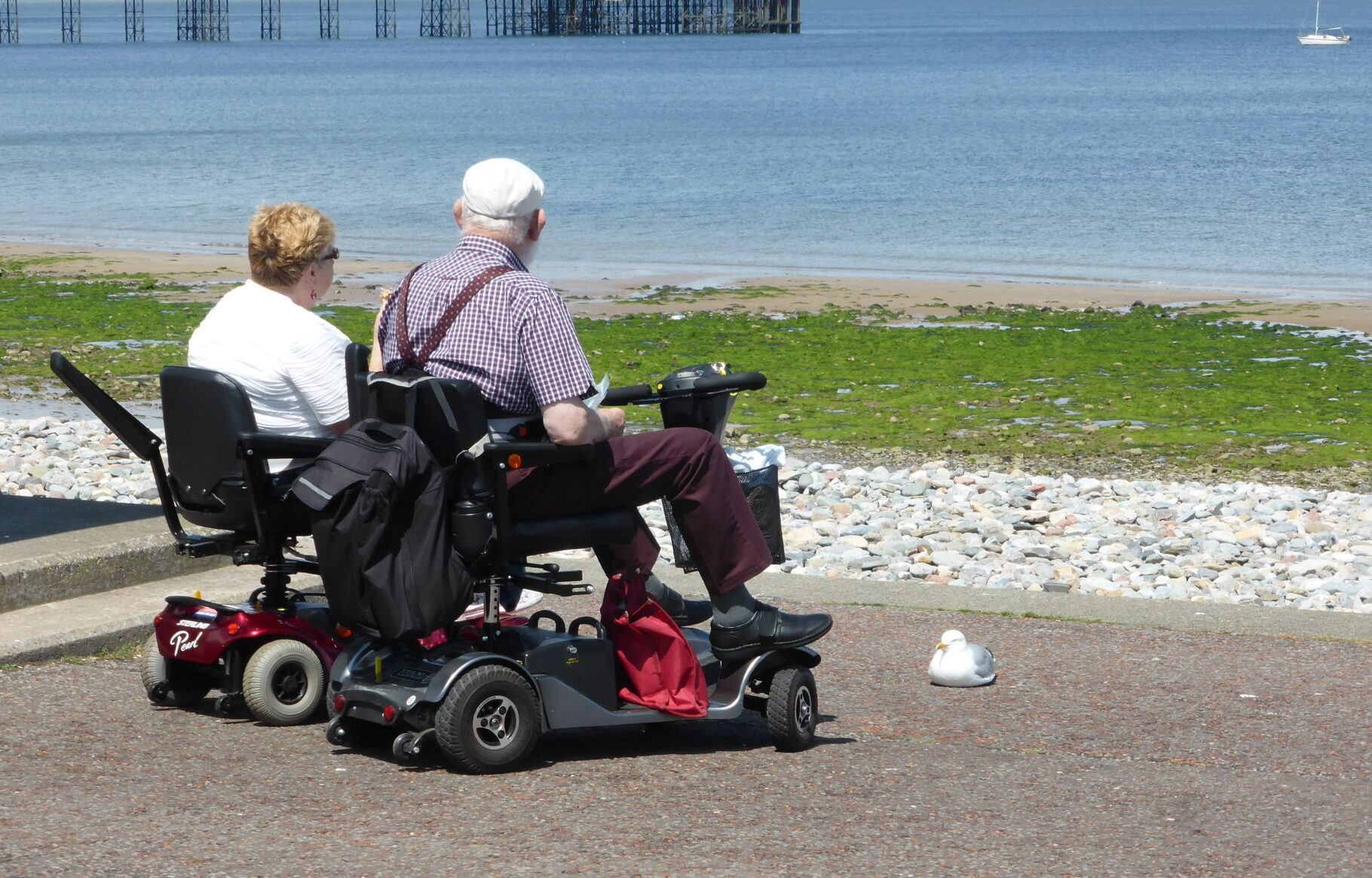
Carnival Cruise Line is sending an important message to passengers traveling with mobility scooters: make sure your scooter fits inside your assigned stateroom, or you could find yourself denied boarding before your vacation even begins.
The warning is particularly important for passengers who rely on electric mobility scooters to get around. Carnival is reminding guests that its onboard scooter storage policy is mandatory, and passengers who arrive with equipment that does not meet the requirements may have to make alternative arrangements at their own expense.
The latest reminder comes as Carnival prepares for another busy stretch of cruise departures, putting accessibility arrangements and pre-cruise planning back in the spotlight. And while the policy itself isn’t new, the consequences of overlooking it could be costly.
The 21-Inch Rule Could Make or Break Your Cruise
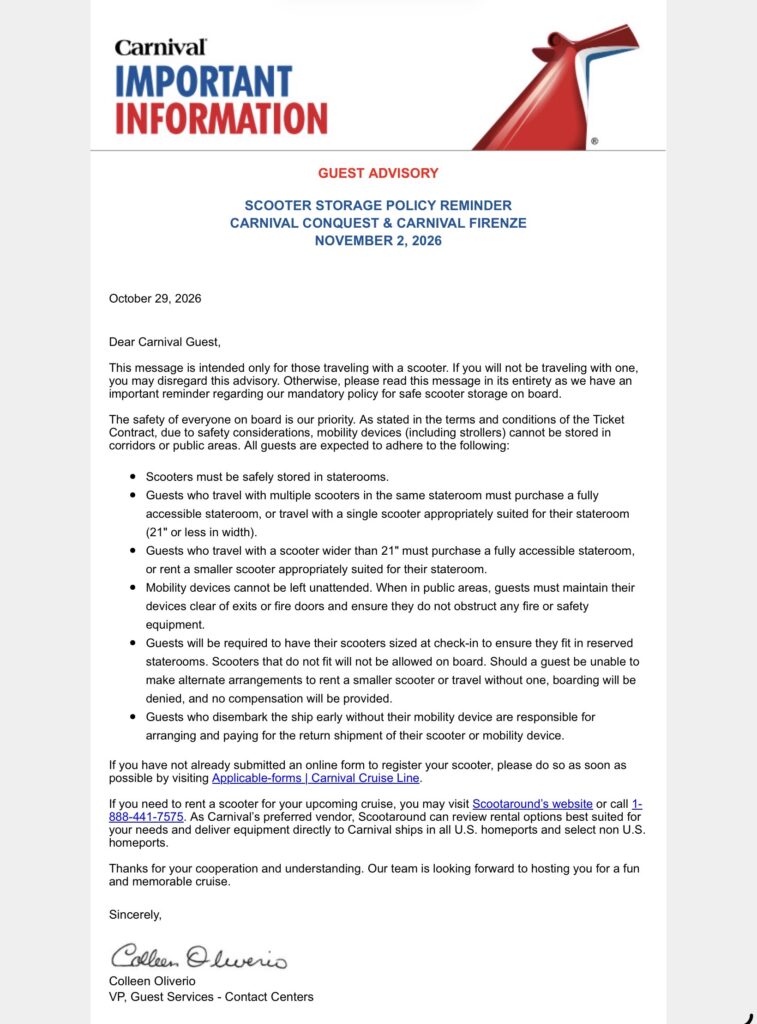
At the center of Carnival’s warning is a measurement that passengers need to know before arriving at the cruise terminal: 21 inches.
Guests bringing a mobility scooter wider than 21 inches must reserve a fully accessible stateroom or arrange to rent a smaller scooter that fits their existing cabin. The same requirement applies to passengers planning to keep multiple scooters in one stateroom.
Why does this matter?
Carnival requires mobility devices to be stored inside passenger cabins rather than parked in hallways, corridors, or other public spaces. Even if a scooter can comfortably navigate the ship’s public areas, that doesn’t necessarily mean it can be safely stored inside a particular cabin.
Standard stateroom and ambulatory accessible cabin doorways measure approximately 22 inches wide, according to Carnival’s accessibility information. However, fitting through the doorway is only part of the equation: the scooter must also be capable of being stored without blocking the passenger’s exit from the room. In other words, don’t assume that a scooter will fit simply because it can squeeze through the cabin entrance.
A fully accessible stateroom offers a wider doorway, measuring approximately 32 inches, although passengers should still confirm that their particular scooter and cabin configuration are compatible.
Scooters Will Be Measured at Check-In
Perhaps the most concerning part of Carnival’s announcement is that passengers won’t simply be trusted to confirm their scooter dimensions themselves.
The cruise line says guests will be required to have their mobility scooters measured at check-in to verify that the equipment fits their reserved stateroom. If the scooter fails that inspection, it will not be permitted aboard.
And Carnival is being quite clear about the potential consequences. If passengers cannot arrange to rent a smaller scooter or travel without their original device, they can be denied boarding, with no compensation provided.
That’s a serious headache for anyone who has already paid for flights, hotels, cruise fare, and other vacation expenses.
The best way to avoid this situation is to contact Carnival’s Guest Access team well before departure. Passengers should not wait until embarkation day to discover that their mobility equipment is incompatible with their cabin.
Carnival’s official accessibility guidance also recommends notifying the cruise line about mobility equipment when booking, or as soon as the need becomes known. Its website provides ship-specific accessible deck plans and information about cabin configurations.
Why Carnival Won’t Allow Scooters in Cruise Ship Hallways
For some passengers, leaving a mobility scooter outside their cabin might seem like a convenient solution, particularly when the stateroom is already crowded with luggage and other belongings.
Unfortunately, that’s not an option under most cruise line rules, including Carnival. The cruise line prohibits mobility devices, including scooters and strollers, from being stored in hallways and public spaces. The concern is that equipment left in these locations can obstruct passenger movement, emergency exits, fire doors, and safety equipment.
Imagine a busy corridor during an emergency evacuation. A scooter parked outside a cabin could become an obstacle for passengers trying to reach stairwells or designated evacuation areas.
Carnival also requires guests to keep mobility devices under their control when using public spaces. Scooters must not be left unattended in venues, and passengers must park them in locations that don’t interfere with emergency access.
There are practical driving considerations, too. Carnival warns scooter users to navigate raised door thresholds carefully and take extra care when backing into and out of elevators, where space can be limited.
These requirements aren’t simply about keeping the hallways looking tidy. They’re part of the cruise line’s approach to maintaining clear emergency access throughout the ship.
What If You Need a Smaller Mobility Scooter?
Passengers who discover that their existing scooter is too wide aren’t necessarily out of options.
Carnival identifies Scootaround as its preferred mobility equipment rental provider. The company offers scooters, wheelchairs, and powerchairs, with delivery available directly to Carnival ships in all U.S. homeports and select international homeports. Passengers should confirm the rental scooter’s actual dimensions before arranging delivery. A smaller-looking model isn’t automatically compliant with Carnival’s requirements.
An Important Reminder About Scooter Batteries
Carnival’s accessibility rules also address the batteries used in electric mobility scooters. The cruise line permits mobility devices powered by gel, dry-cell, absorbed glass mat (AGM), or lithium-ion batteries. It also requires batteries to be charged inside the guest’s stateroom. Carnival recommends scooters with removable batteries, which can make charging arrangements more manageable.
What Happens If You Have to Leave the Ship Without Your Scooter?
There’s another provision in Carnival’s latest advisory that deserves attention.
Passengers who disembark a ship early without their mobility device are responsible for arranging and paying for its return shipment. That could become relevant if a passenger experiences a medical emergency and needs to leave the ship before the scheduled end of the voyage. While this is probably not something most travelers want to think about when planning a vacation, it’s worth considering before departure. Passengers who rely on expensive mobility equipment should know how they would handle its transportation if their travel plans changed unexpectedly. The financial responsibility for retrieving the equipment falls on the passenger.
How Passengers Can Avoid Being Denied Boarding
For travelers preparing for an upcoming Carnival cruise, a little preparation could prevent a major vacation disaster.
Here are five steps passengers should take before heading to the cruise terminal:
- Measure the scooter: Check its full width, including any protruding components, and compare the measurement with Carnival’s requirements.
- Confirm the stateroom: Verify that the reserved cabin can accommodate the scooter and that there is enough room to store it without blocking the exit.
- Submit the mobility device form: Register the scooter through Carnival’s pre-cruise accessibility forms .
- Arrange a rental if necessary: Contact Scootaround early if the existing scooter is too large.
- Check battery requirements: Confirm that the battery type is permitted and that the equipment can be charged appropriately inside the cabin.
Passengers with questions can contact Carnival’s Guest Access team at 1-800-438-6744, extension 70025, or email access@carnival.com.
Keep track of all the details on your cruise with our Ultimate Cruise Planner!
Designed from my own cruising adventures, this planner helps me stay organized at sea. With packing checklists, budget trackers, and a daily schedule, it keeps your vacation organized and stress-free. A must-have for first-time cruisers and seasoned sailors alike!